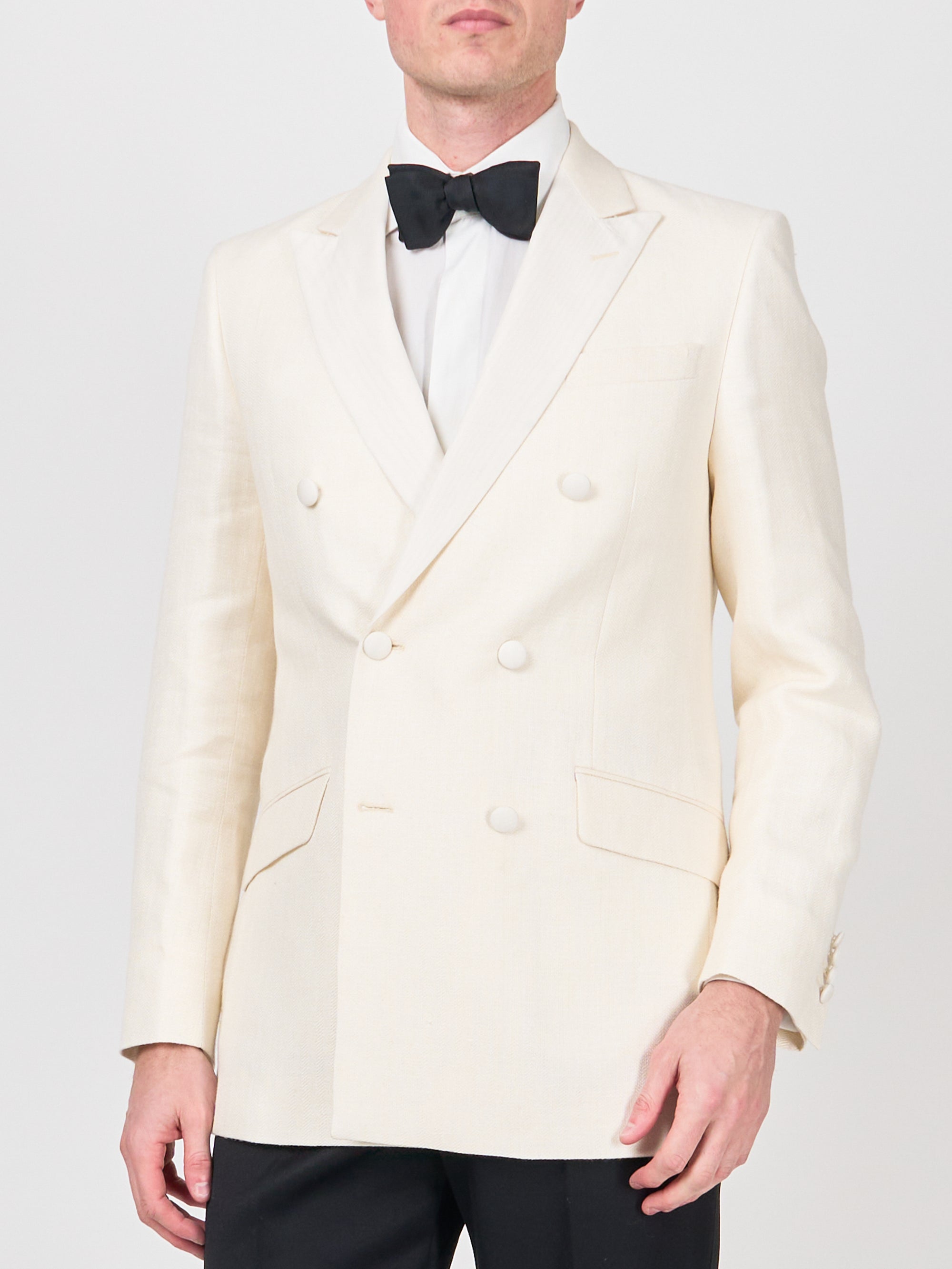
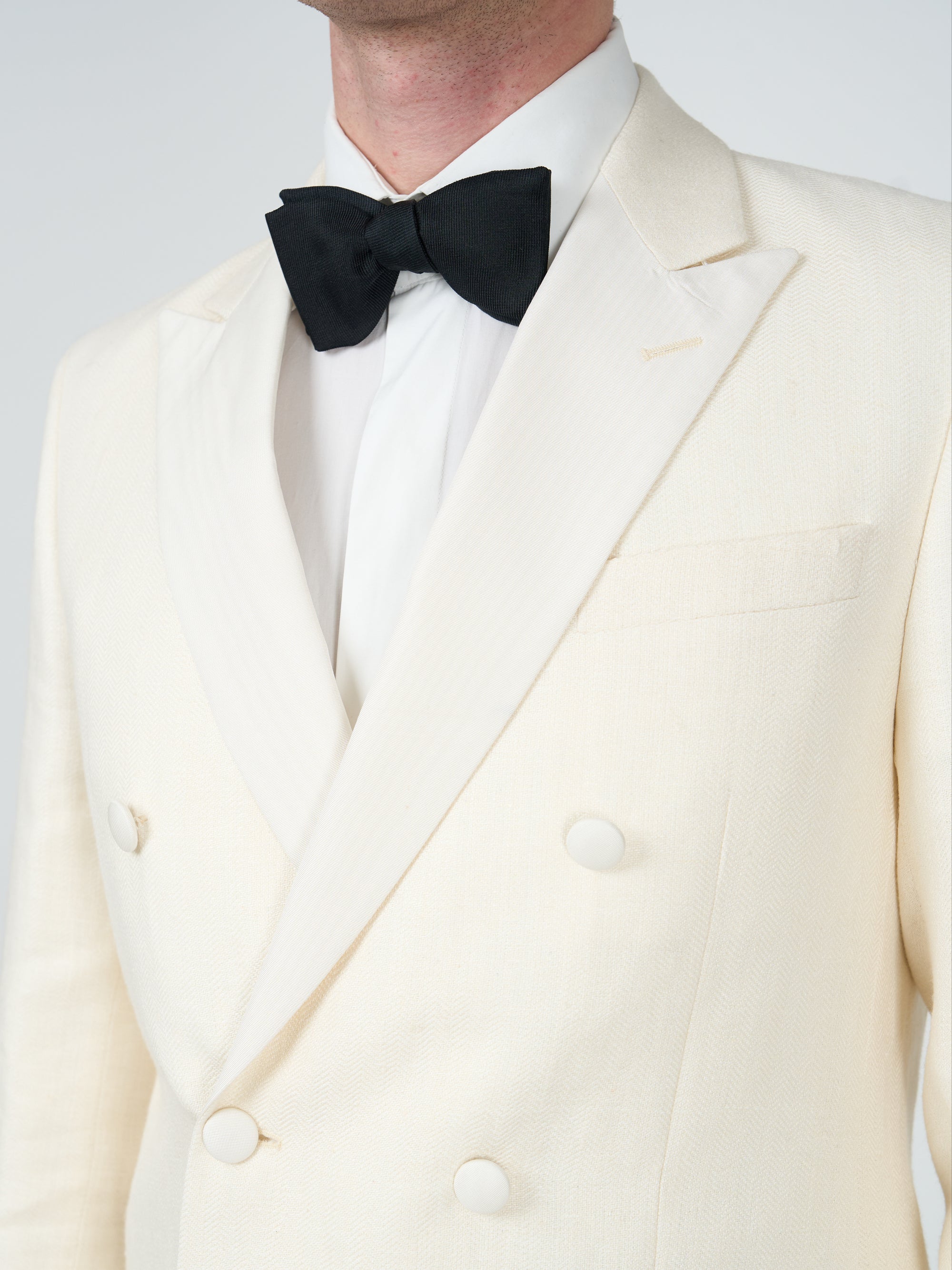
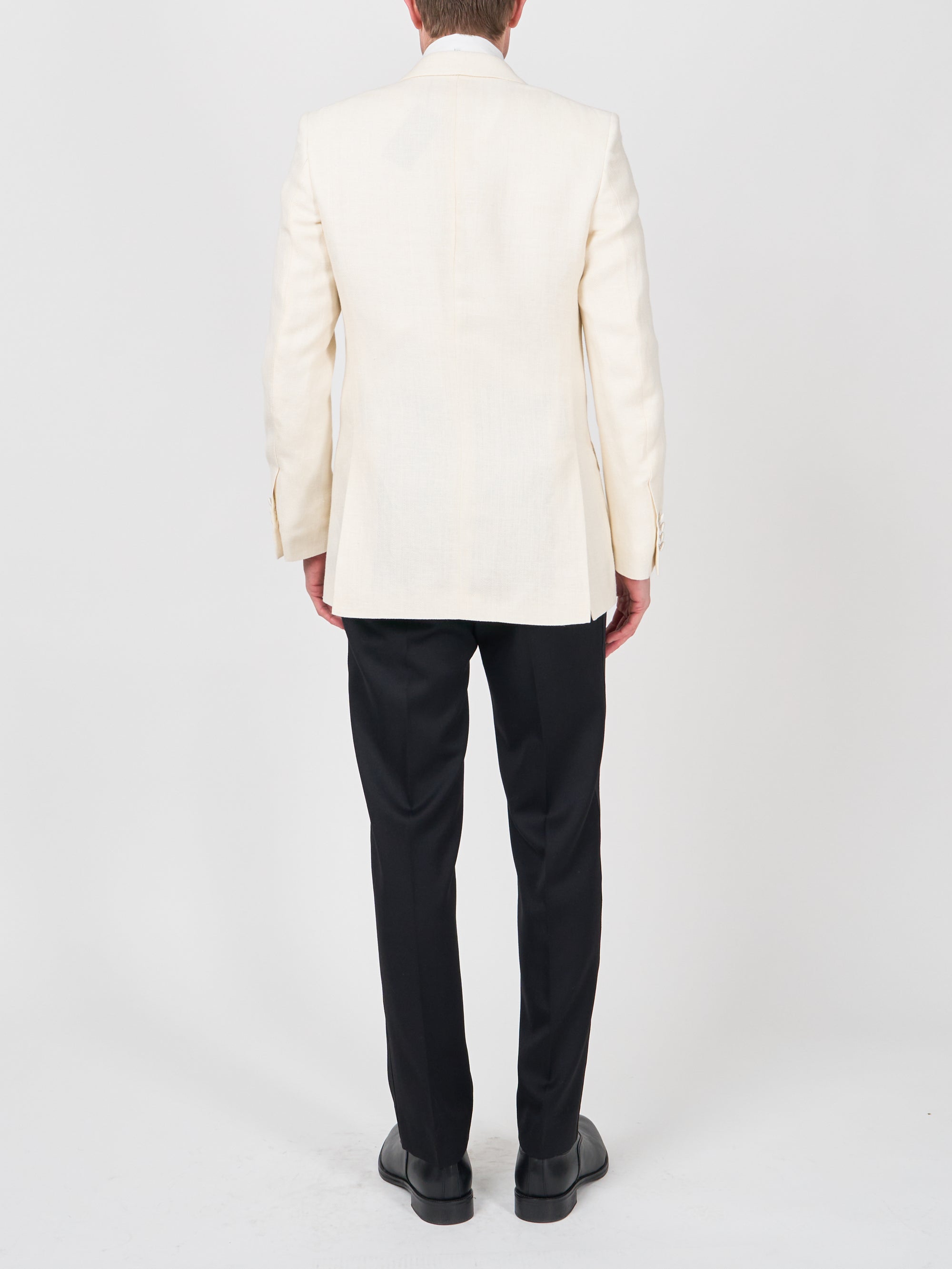
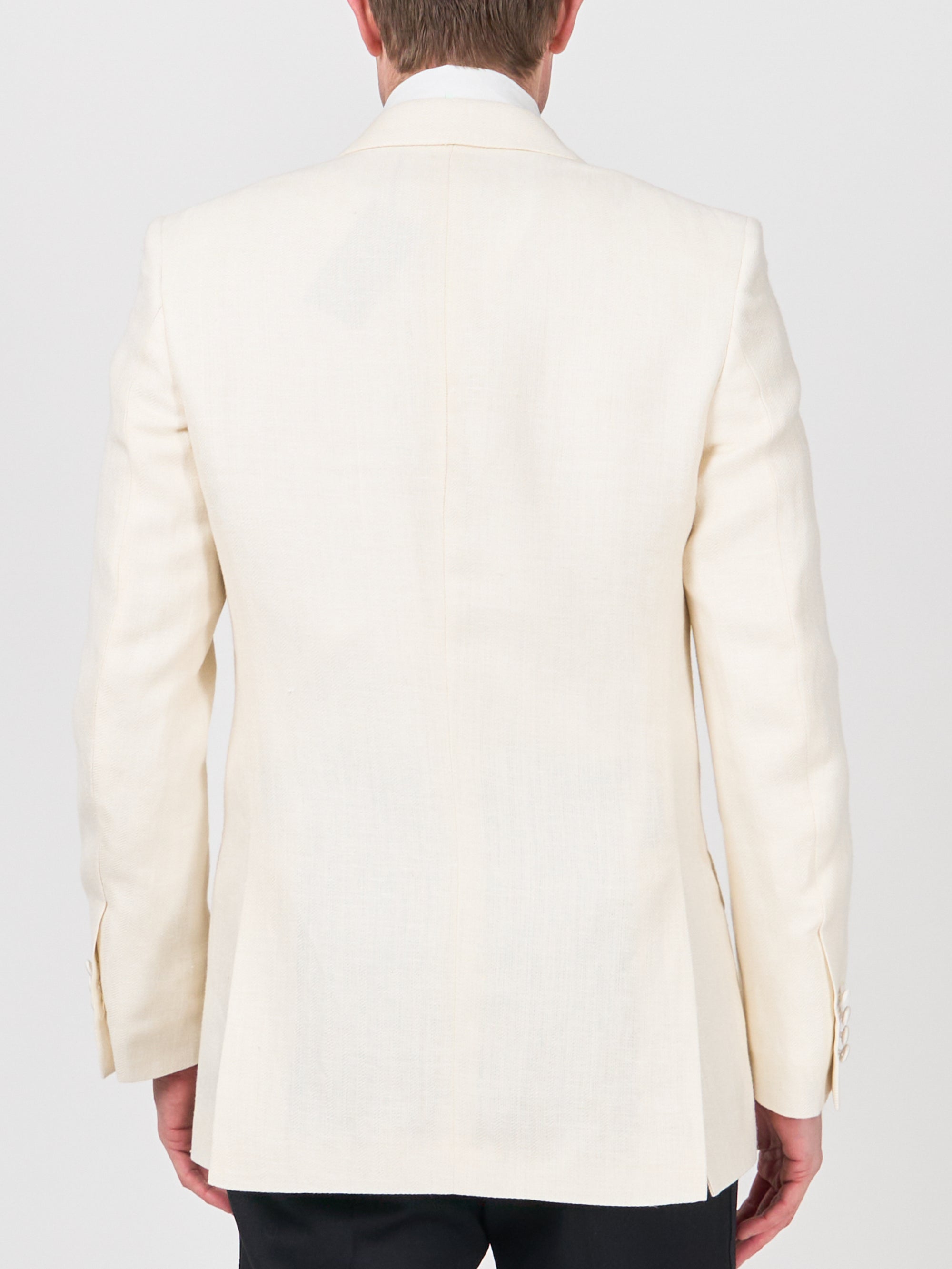
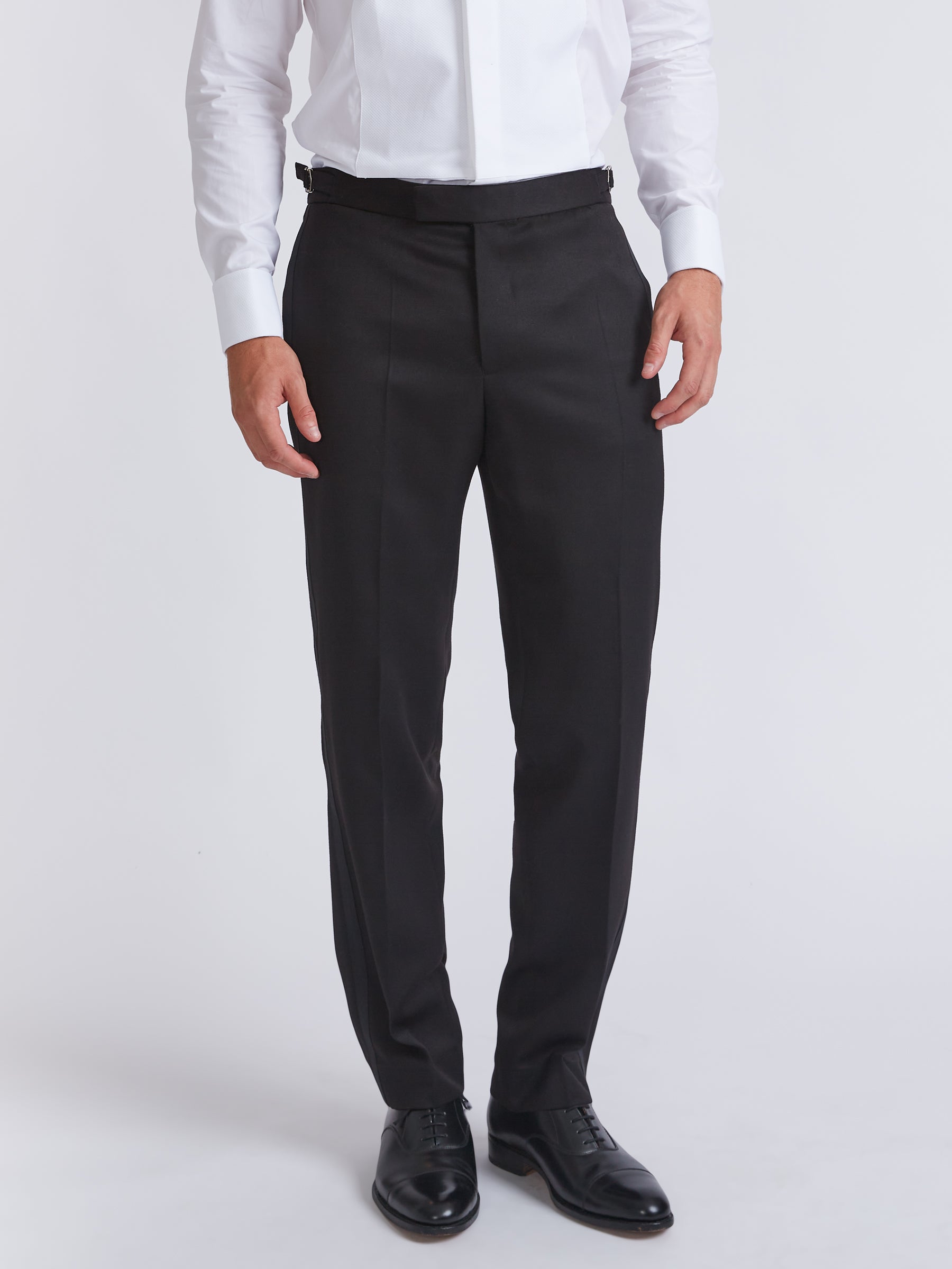
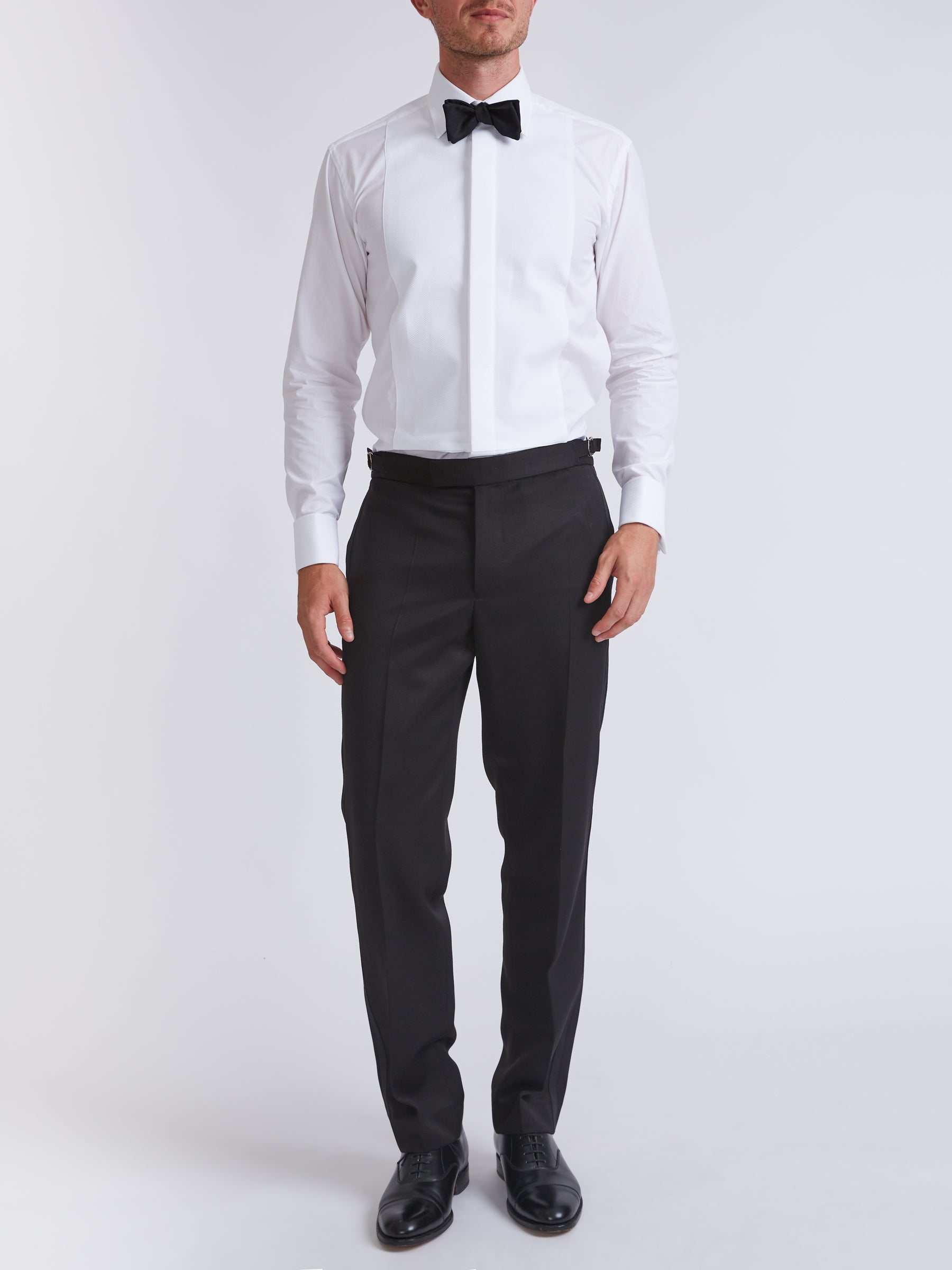
There is a particular moment, usually somewhere between trying on the jacket and fastening the braces, when people realise formal tailoring is meant to sit differently. Higher on the waist. Cleaner through the leg. Less restrictive than expected. Better, generally.
At Favourbrook, we spend a great deal of time talking about morning coats, lapels, waistcoat cloths and dress codes, but the trousers are often the part that quietly transforms the silhouette. Get them wrong and even the best jacket struggles. Get them right and the entire look settles into place.
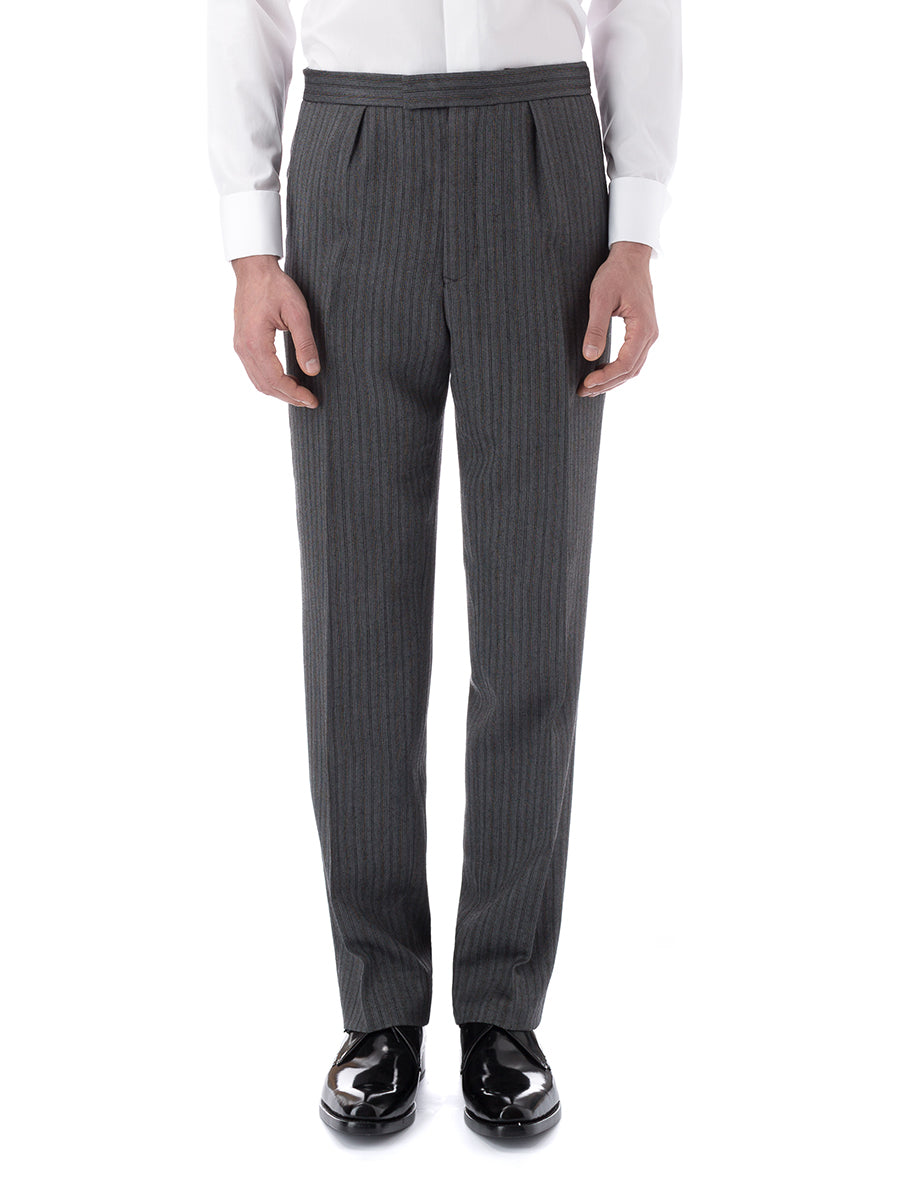
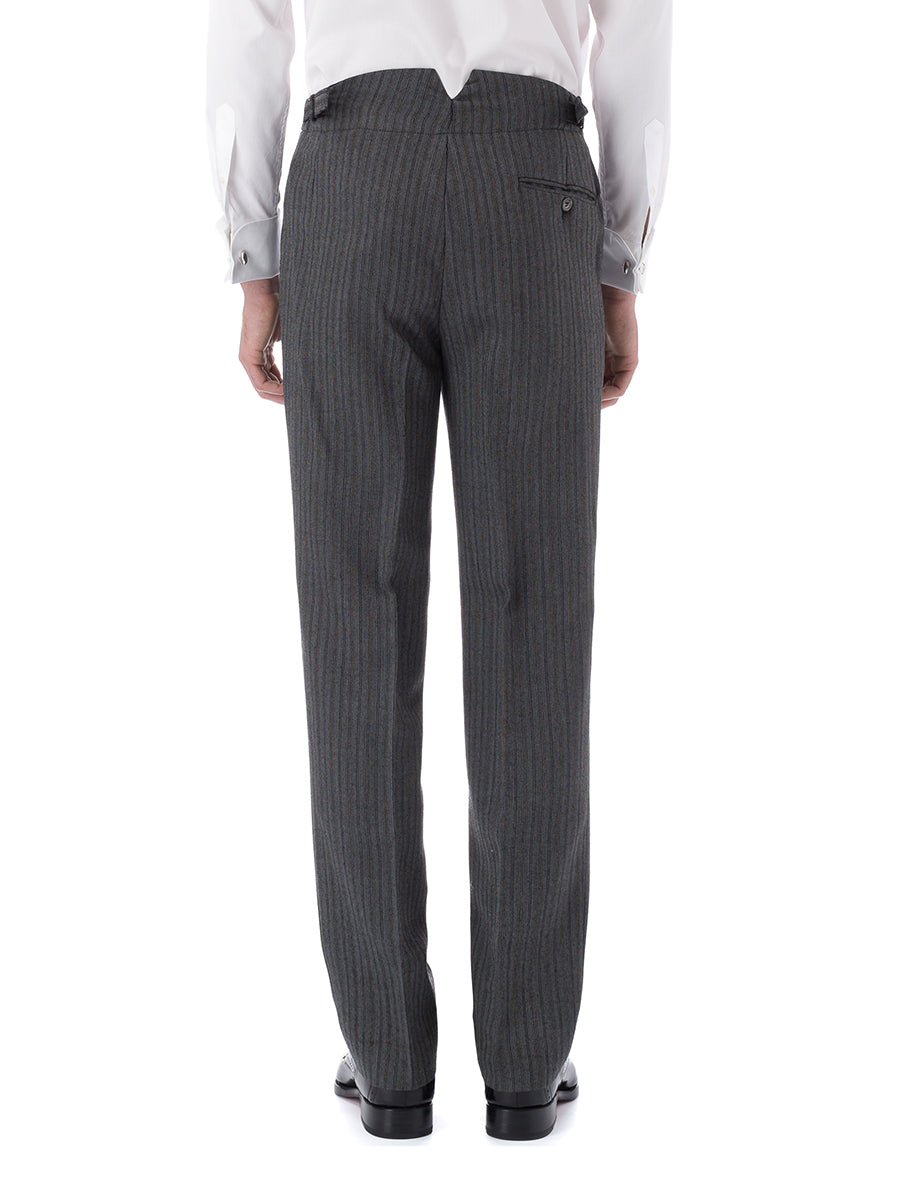
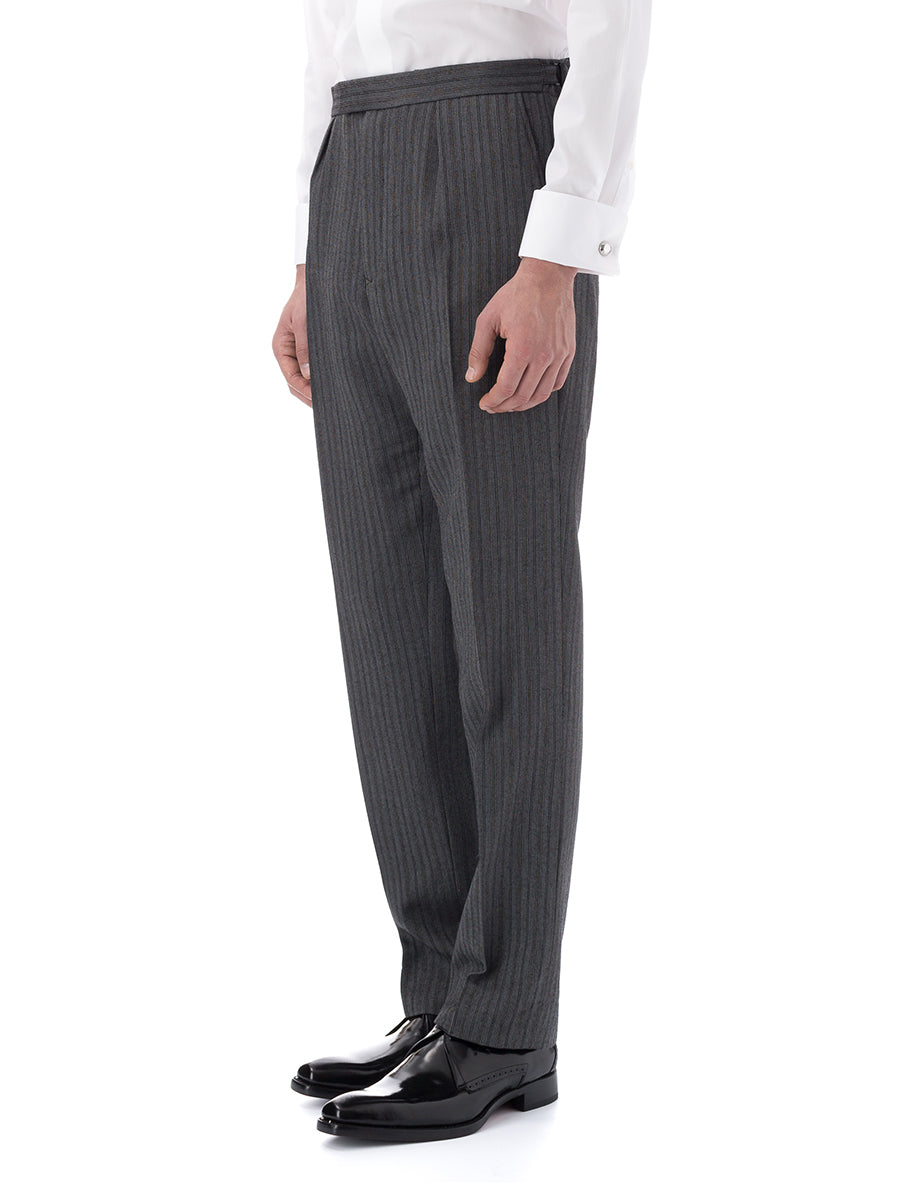
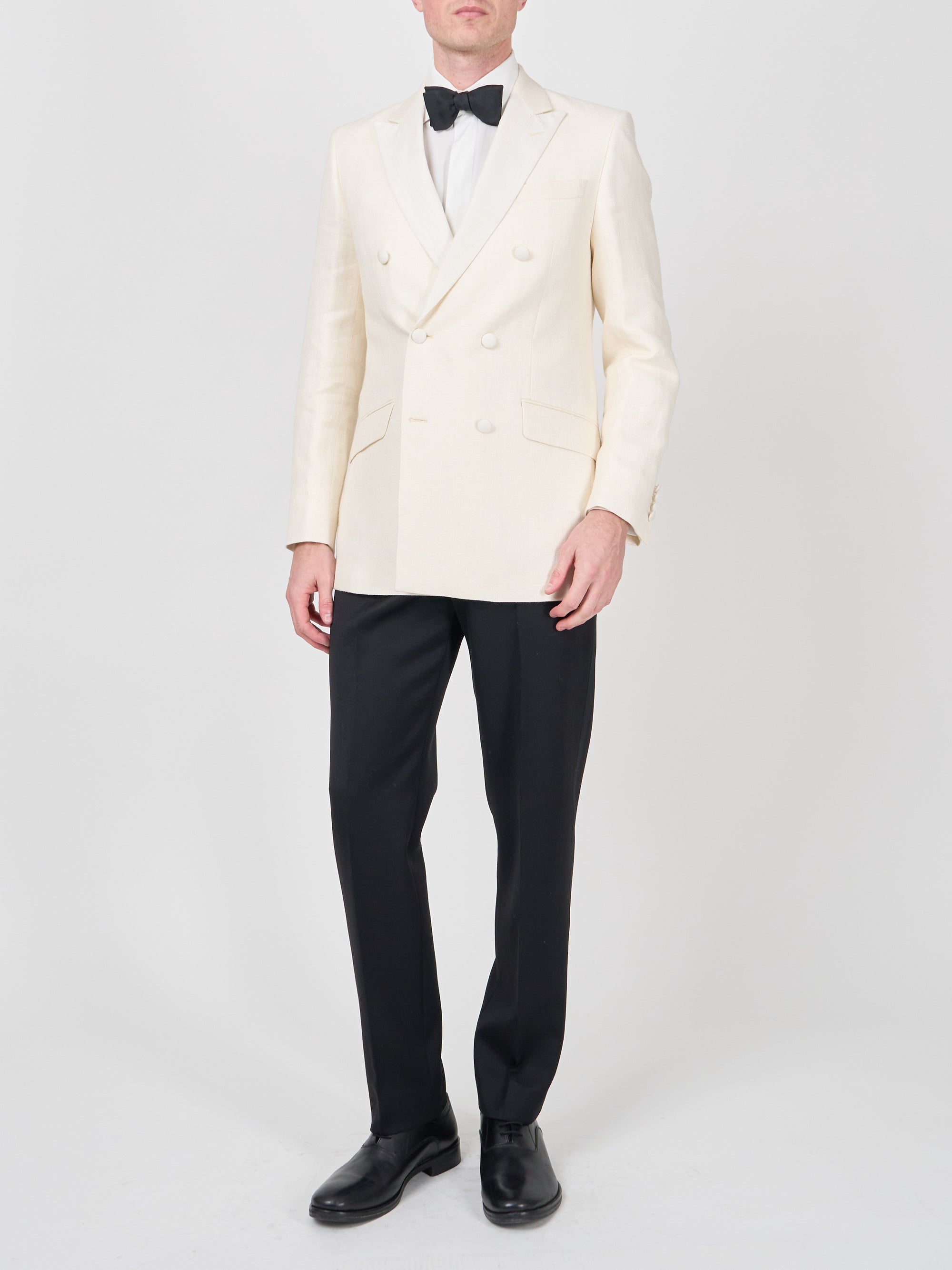
Unlike modern office tailoring, formal trousers are not designed to cling low on the hips with a belt pulled tight. Proper occasion trousers are cut to sit naturally on the waist, lengthening the leg and creating a cleaner line beneath the jacket or waistcoat. They are intended to drape, not squeeze.
This is one of the reasons traditional formalwear still looks so elegant decades later. The proportions are simply more flattering. A higher rise allows the jacket to move correctly, prevents shirt bunching through the middle and creates the uninterrupted line associated with proper tailoring.
Why Formal Trousers Sit Higher
Most men are now accustomed to low-rise trousers, largely because contemporary casualwear has conditioned them to wear everything on the hips. Formal tailoring follows different rules entirely.
Morning trousers, dinner suit trousers and traditional pleated tailoring are designed to sit closer to the natural waist. Not only is this visually more elegant, it is considerably more comfortable over the course of a long wedding, race meeting or evening event.
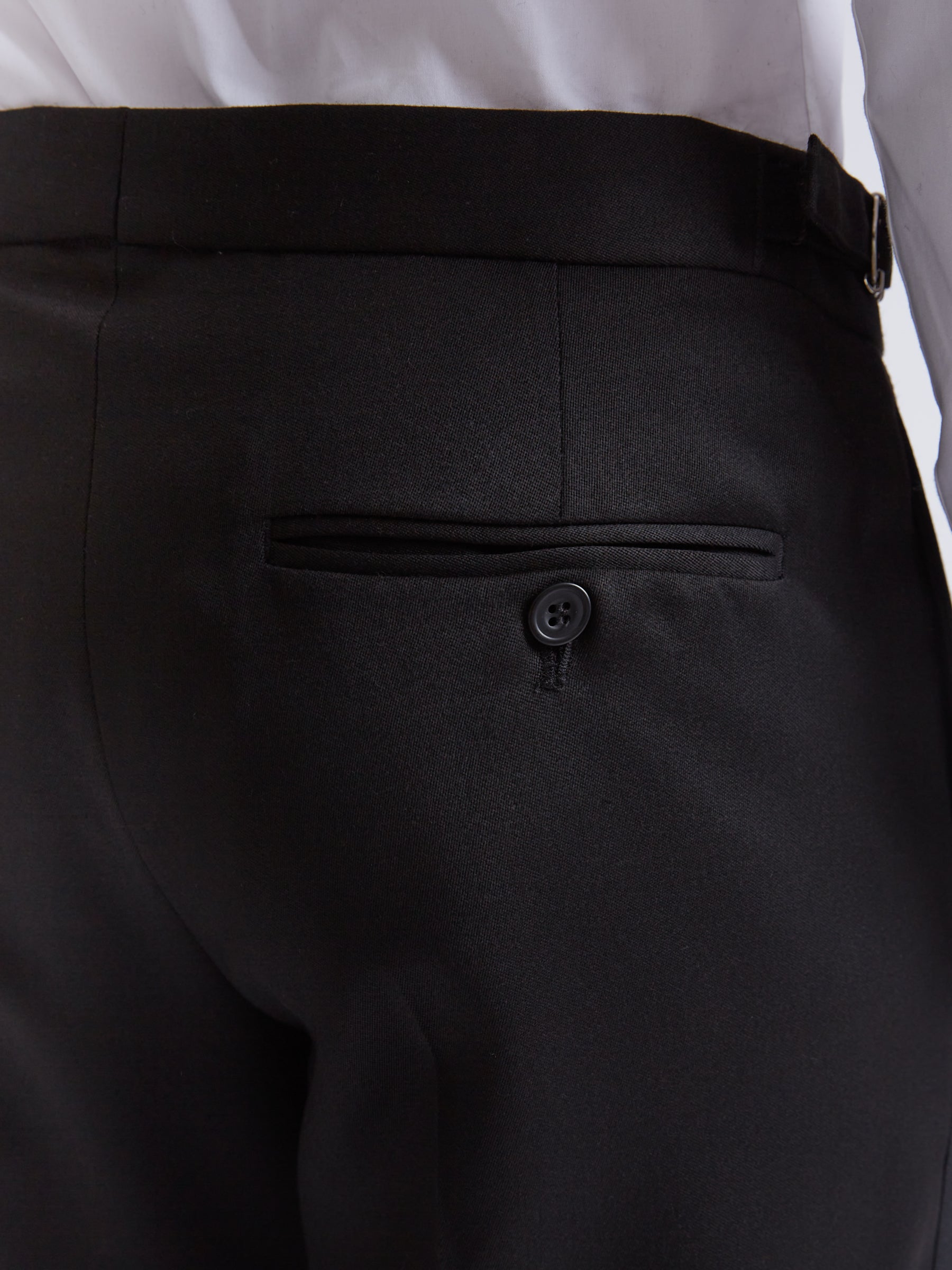
A well-cut pair should feel secure without needing constant adjustment. The waistband sits cleanly beneath the waistcoat, the front hangs smoothly and the leg falls with proper drape from hip to hem.

At Favourbrook, many of our formal trousers are designed intentionally with this higher rise because they work properly with waistcoats, braces and longer-line tailoring. It is not nostalgia for its own sake. It is simply better proportion.
Braces, Not Belts
One of the quickest ways to improve formal tailoring is to remove the belt entirely.
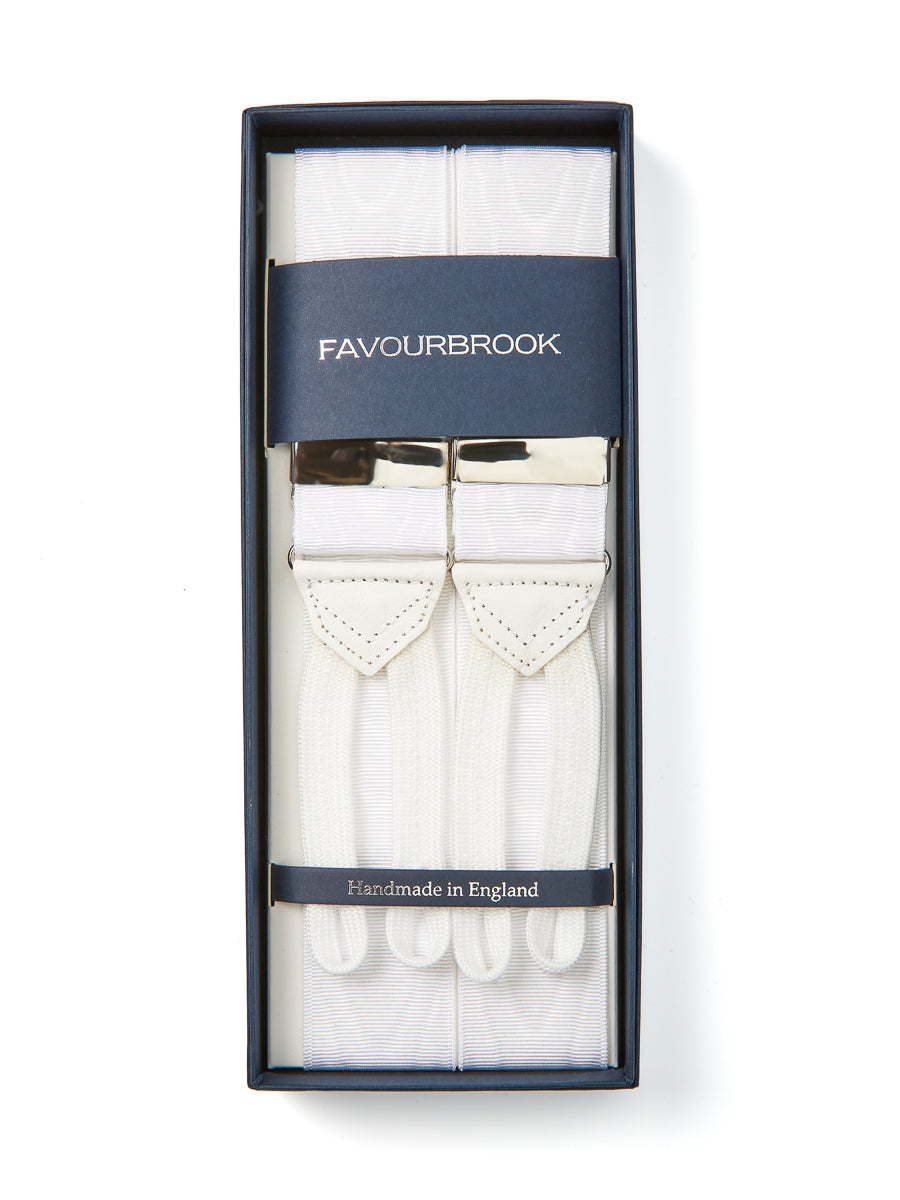
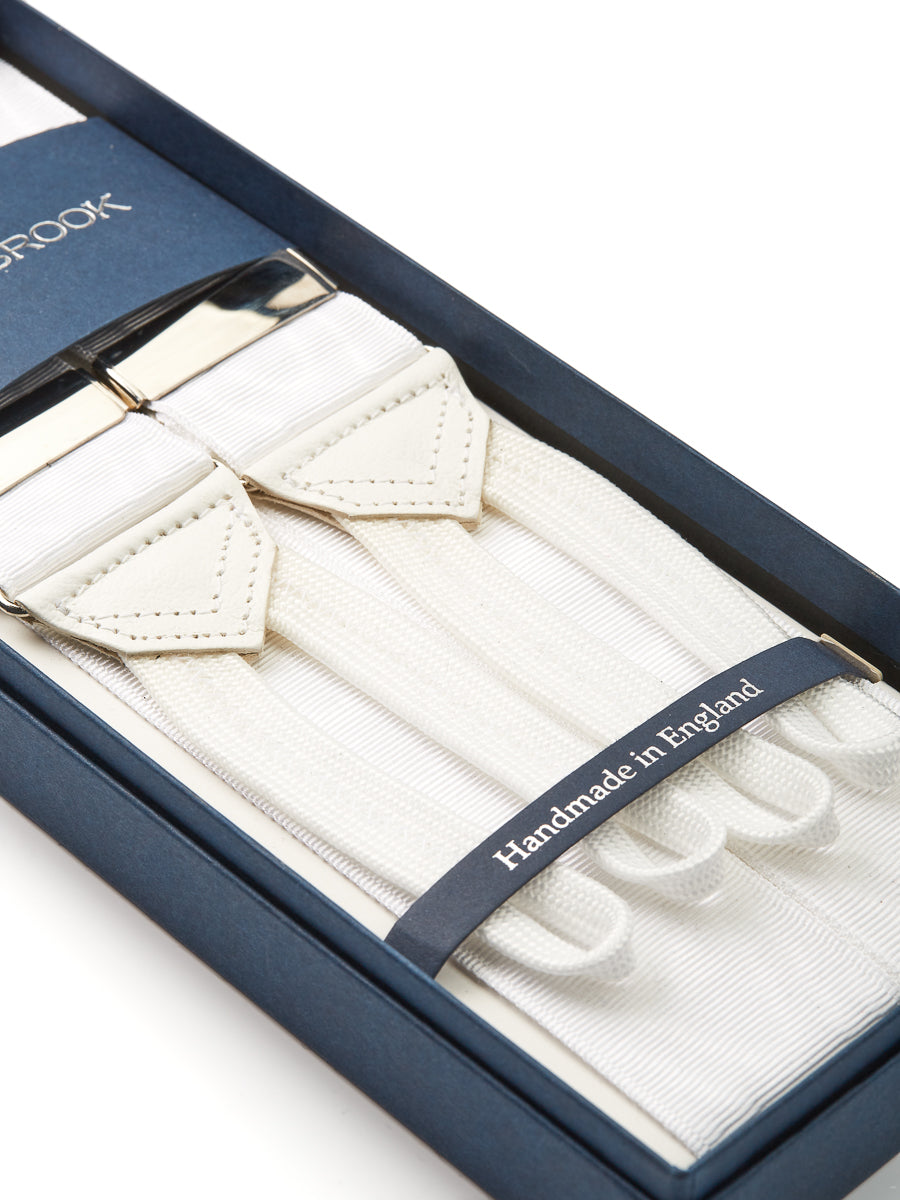
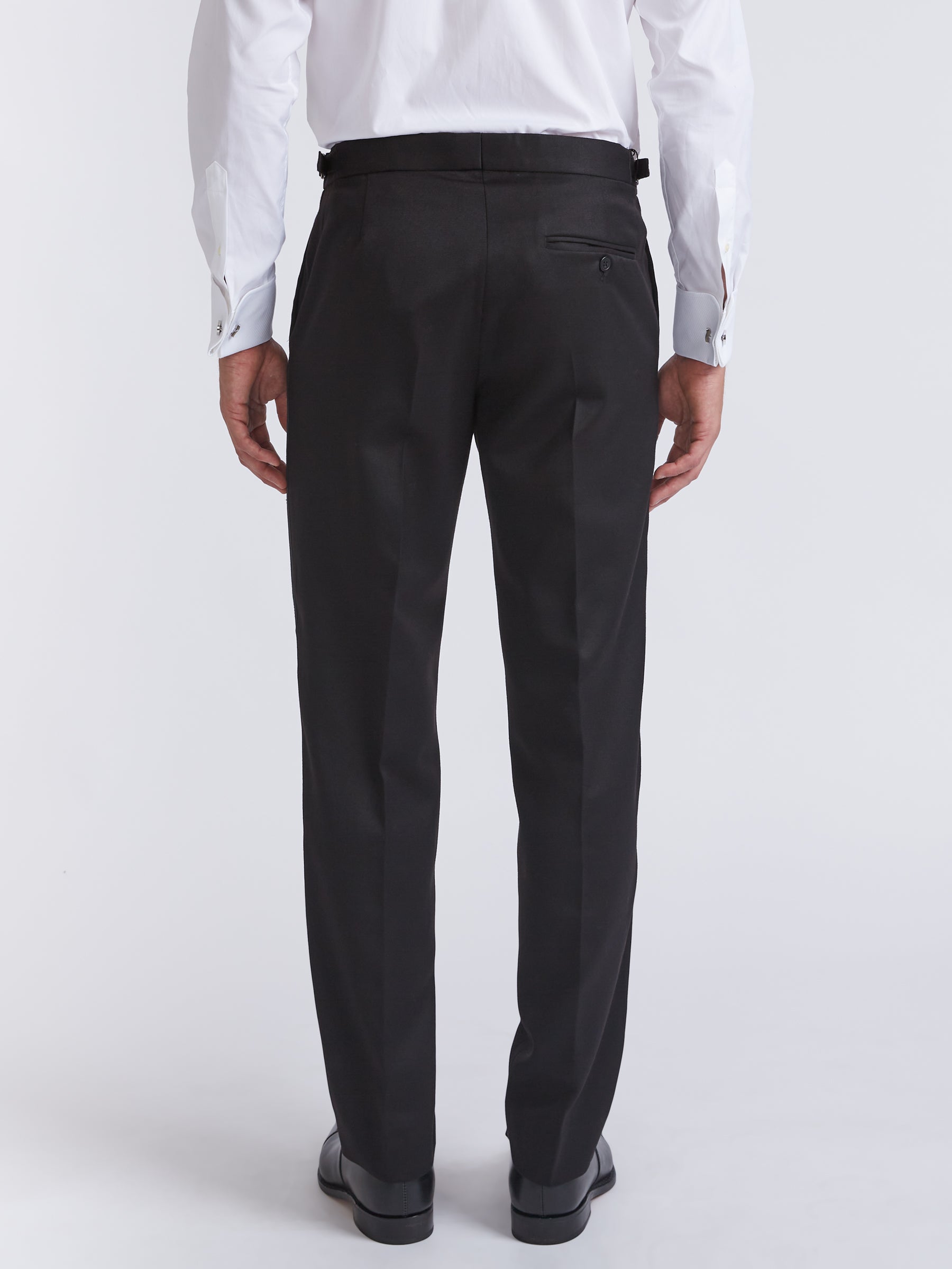
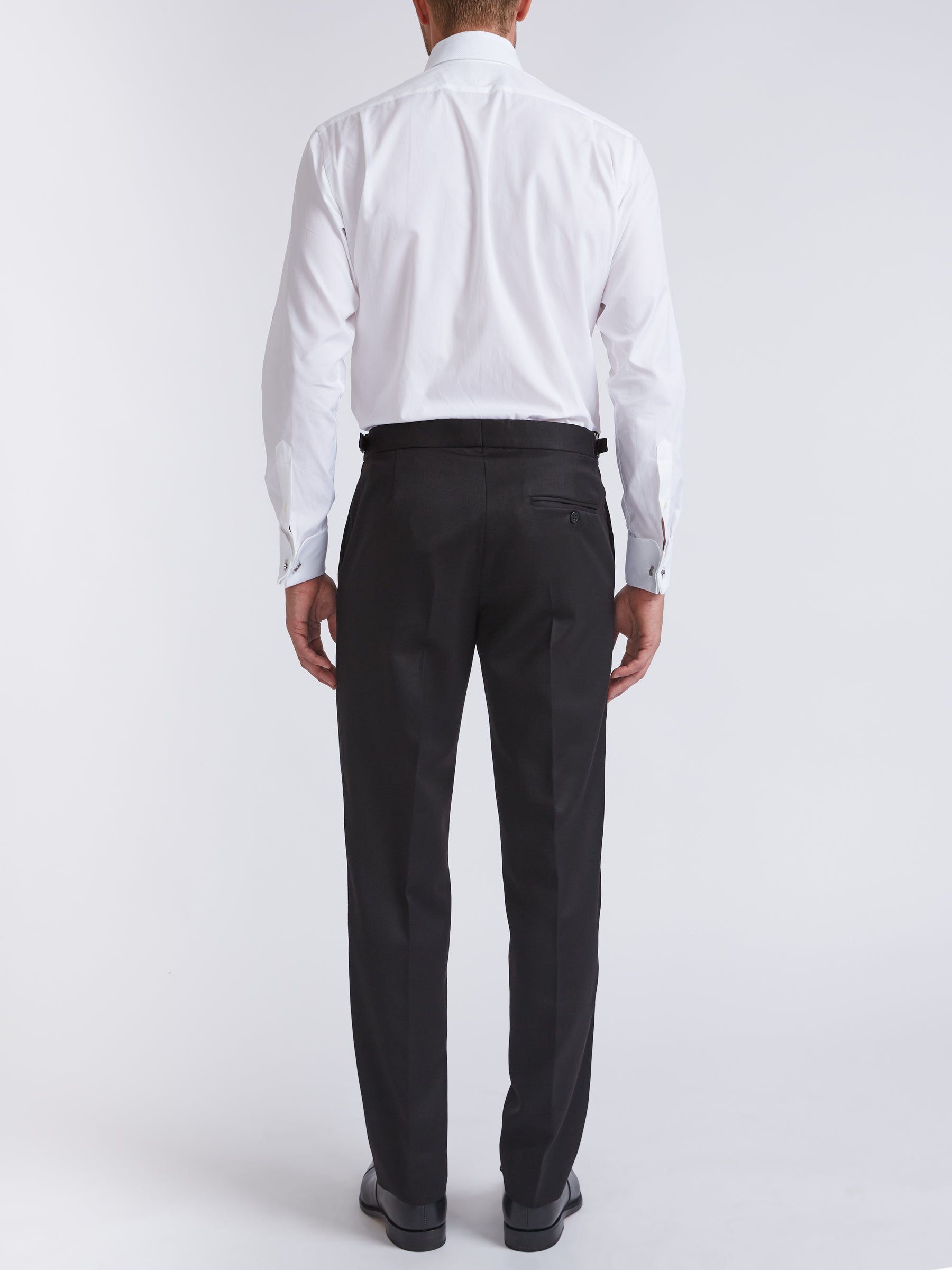
Belts tend to interrupt the clean line of formalwear and often force trousers to sit lower than intended. Braces allow the trouser to hang correctly from the shoulder, which is why traditional morning trousers and black tie trousers are designed with brace buttons or side adjusters instead.