A Guide To Formal Trousers

A Guide To Formal Trousers

There is a particular moment, usually somewhere between trying on the jacket and fastening the braces, when people realise formal tailoring is meant to sit differently. Higher on the waist. Cleaner through the leg. Less restrictive than expected. Better, generally.

At Favourbrook, we spend a great deal of time talking about morning coats, lapels, waistcoat cloths and dress codes, but the trousers are often the part that quietly transforms the silhouette. Get them wrong and even the best jacket struggles. Get them right and the entire look settles into place.

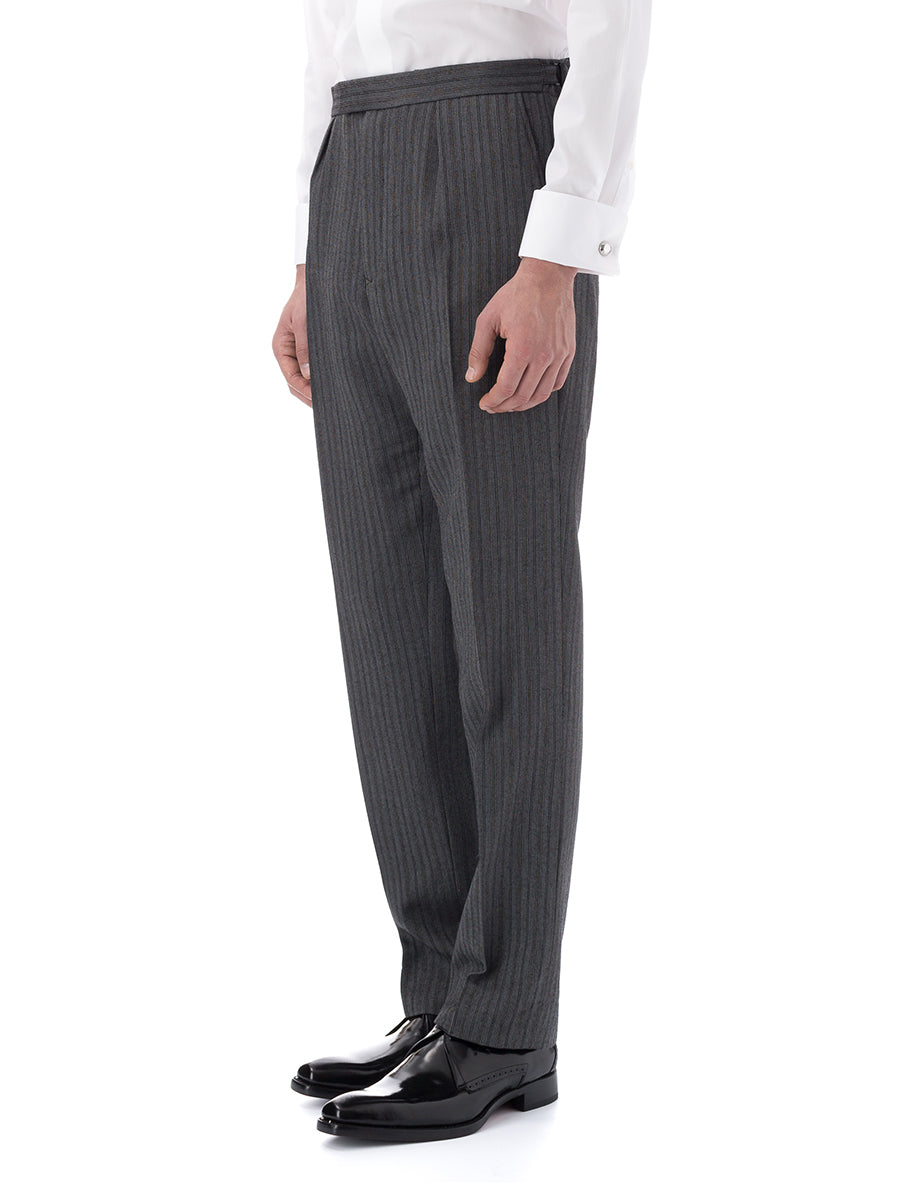
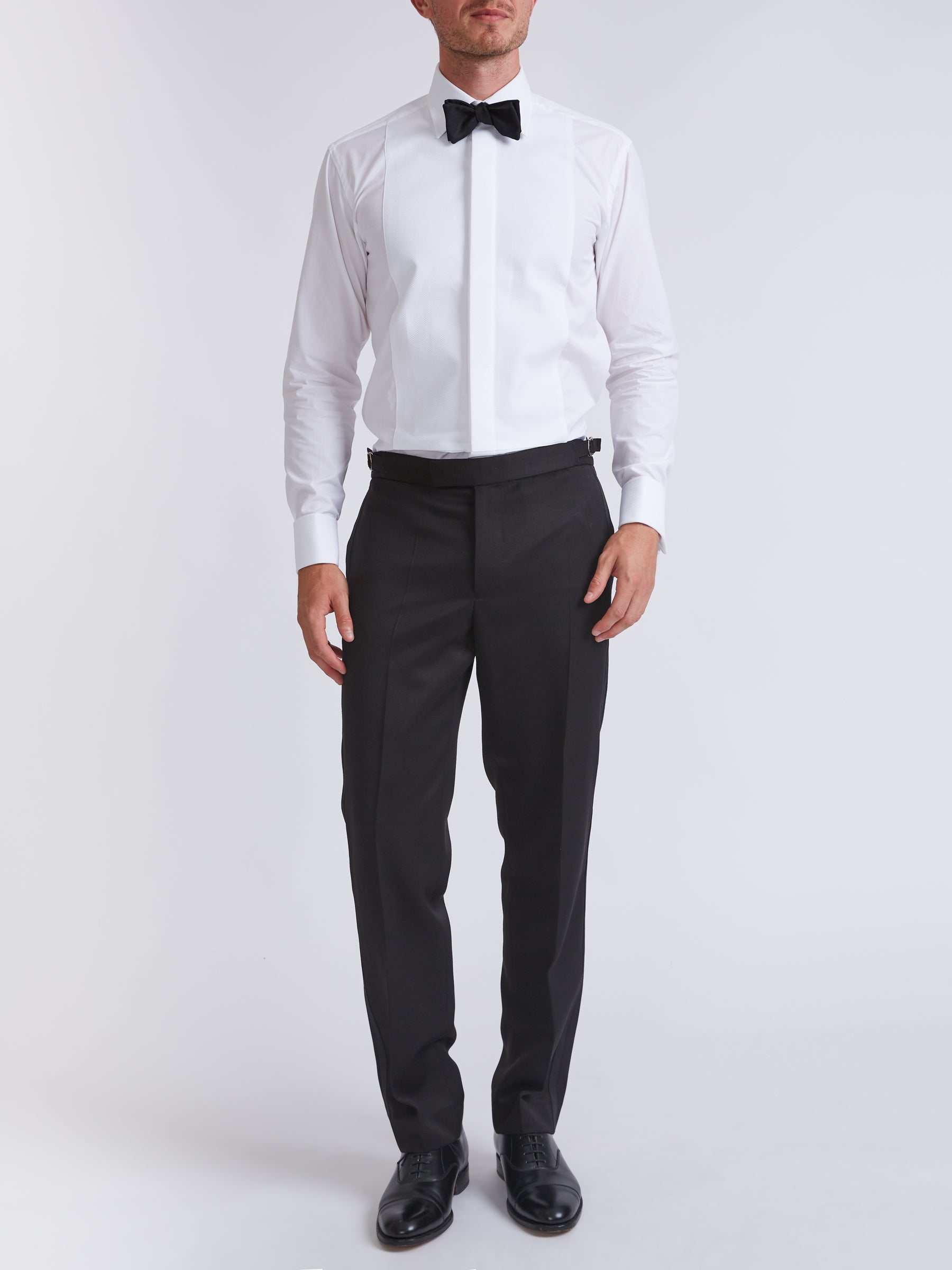
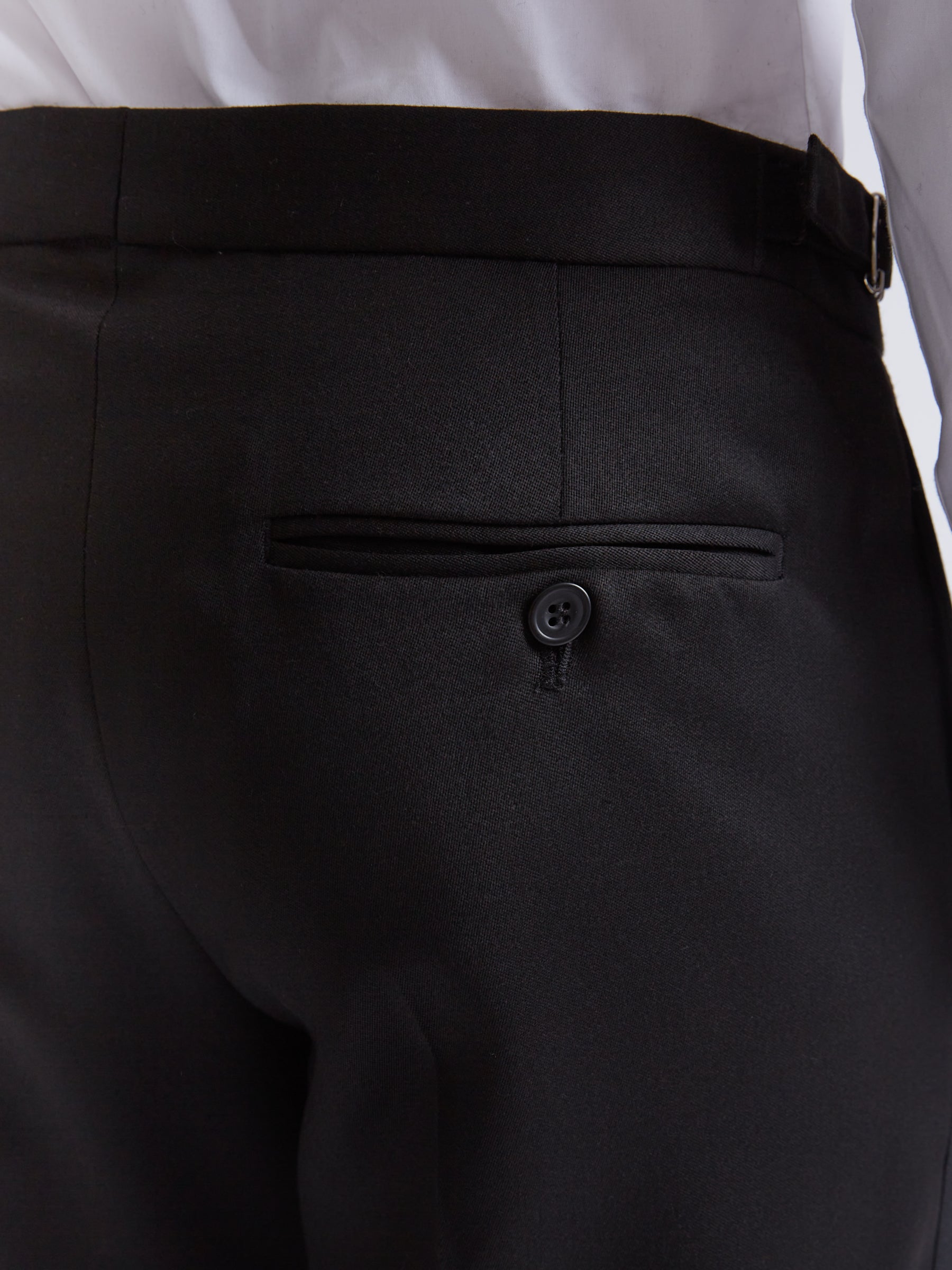
Unlike modern office tailoring, formal trousers are not designed to cling low on the hips with a belt pulled tight. Proper occasion trousers are cut to sit naturally on the waist, lengthening the leg and creating a cleaner line beneath the jacket or waistcoat. They are intended to drape, not squeeze.

This is one of the reasons traditional formalwear still looks so elegant decades later. The proportions are simply more flattering. A higher rise allows the jacket to move correctly, prevents shirt bunching through the middle and creates the uninterrupted line associated with proper tailoring.

Why Formal Trousers Sit Higher

Most men are now accustomed to low-rise trousers, largely because contemporary casualwear has conditioned them to wear everything on the hips. Formal tailoring follows different rules entirely.

Morning trousers, dinner suit trousers and traditional pleated tailoring are designed to sit closer to the natural waist. Not only is this visually more elegant, it is considerably more comfortable over the course of a long wedding, race meeting or evening event.

A well-cut pair should feel secure without needing constant adjustment. The waistband sits cleanly beneath the waistcoat, the front hangs smoothly and the leg falls with proper drape from hip to hem.

At Favourbrook, many of our formal trousers are designed intentionally with this higher rise because they work properly with waistcoats, braces and longer-line tailoring. It is not nostalgia for its own sake. It is simply better proportion.

Braces, Not Belts

One of the quickest ways to improve formal tailoring is to remove the belt entirely.

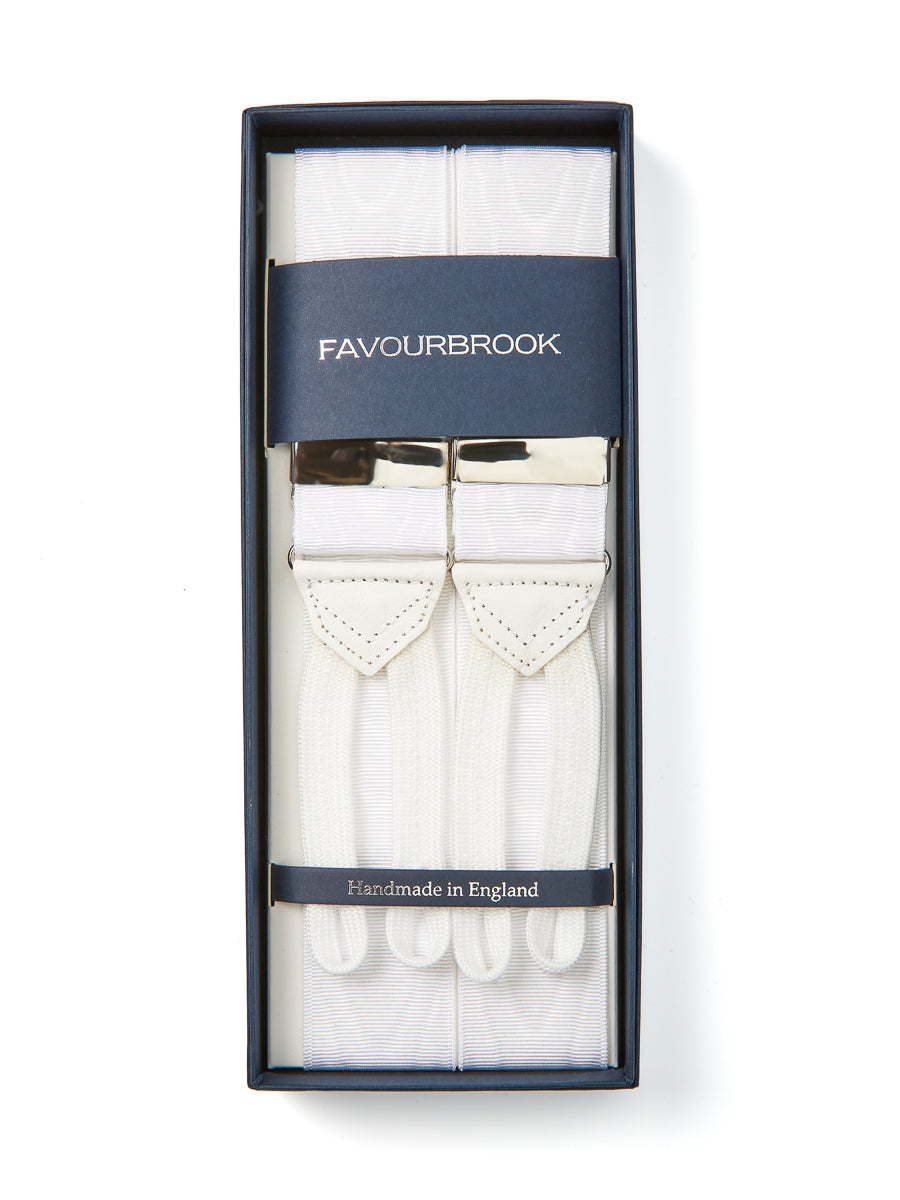
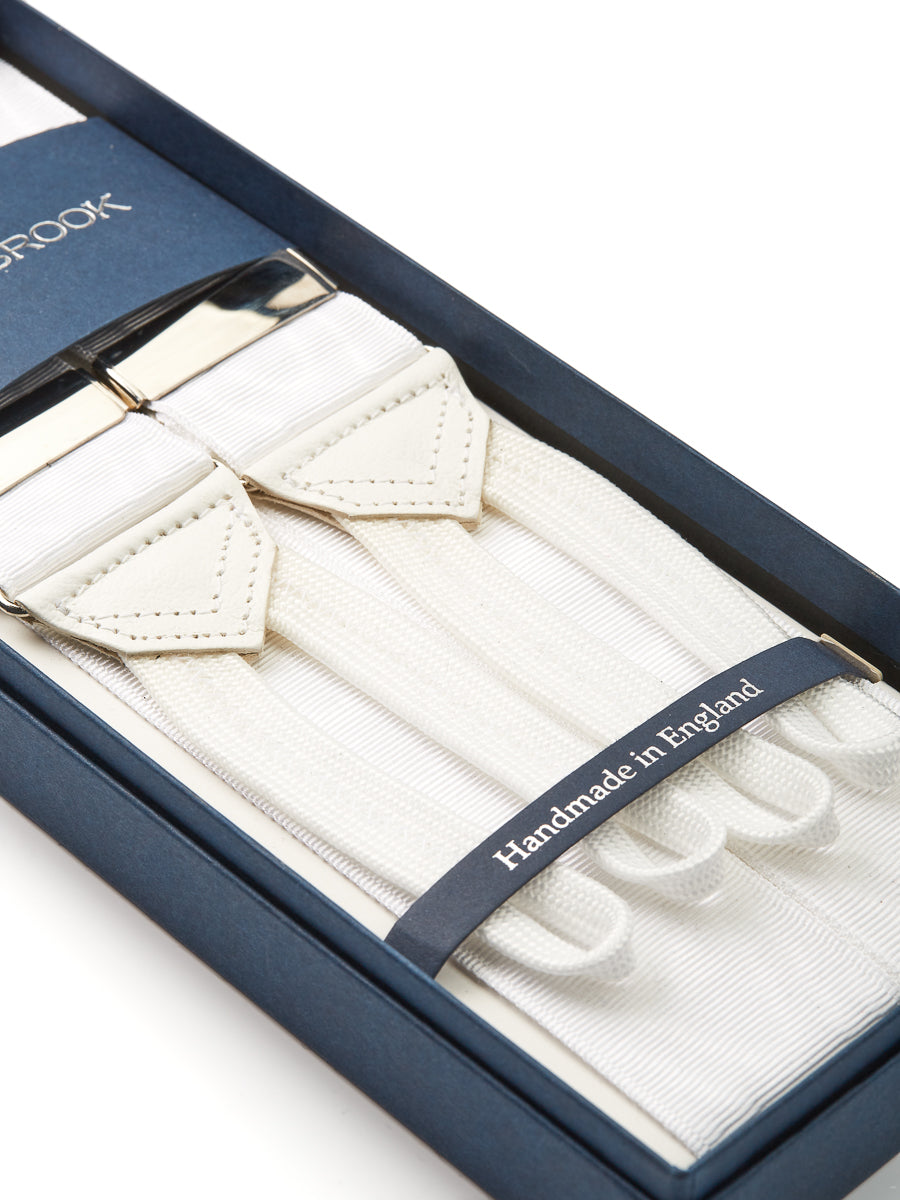
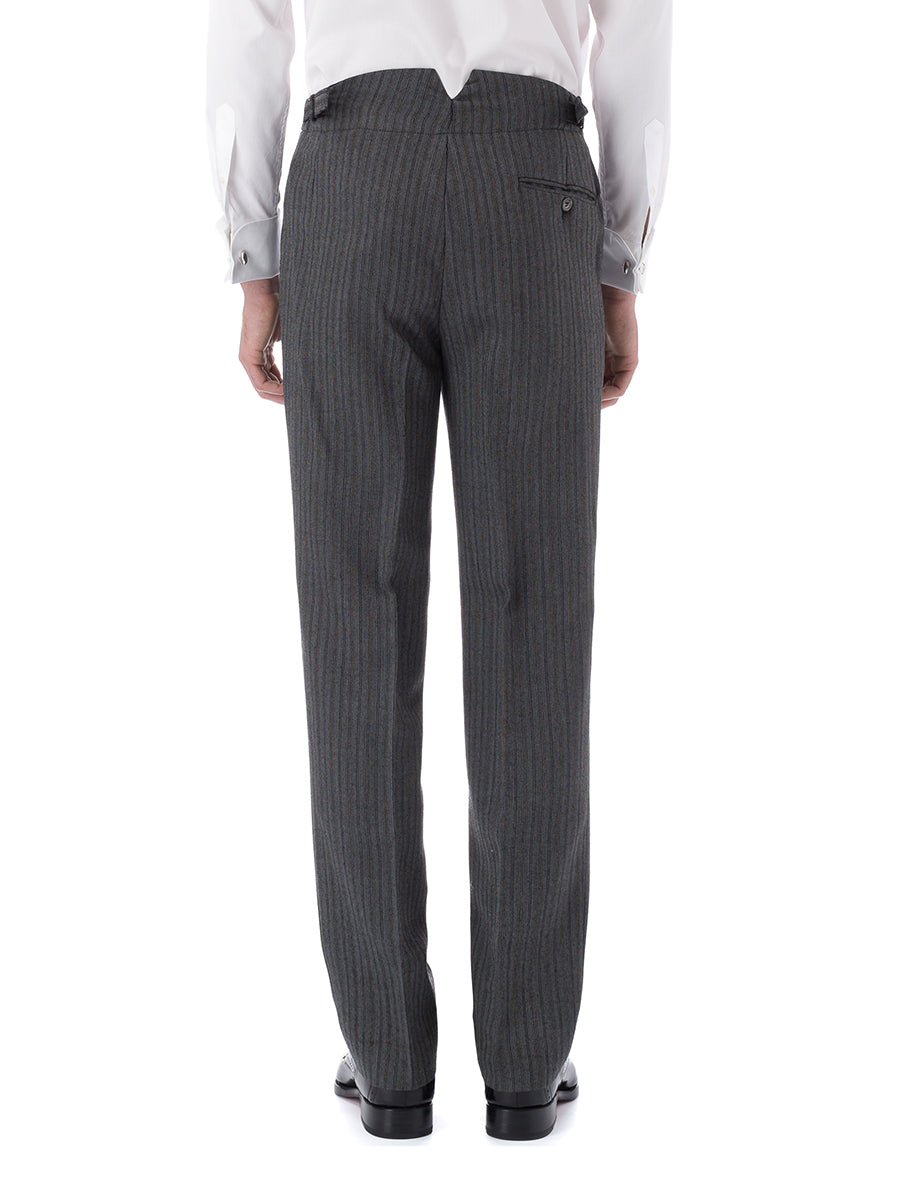
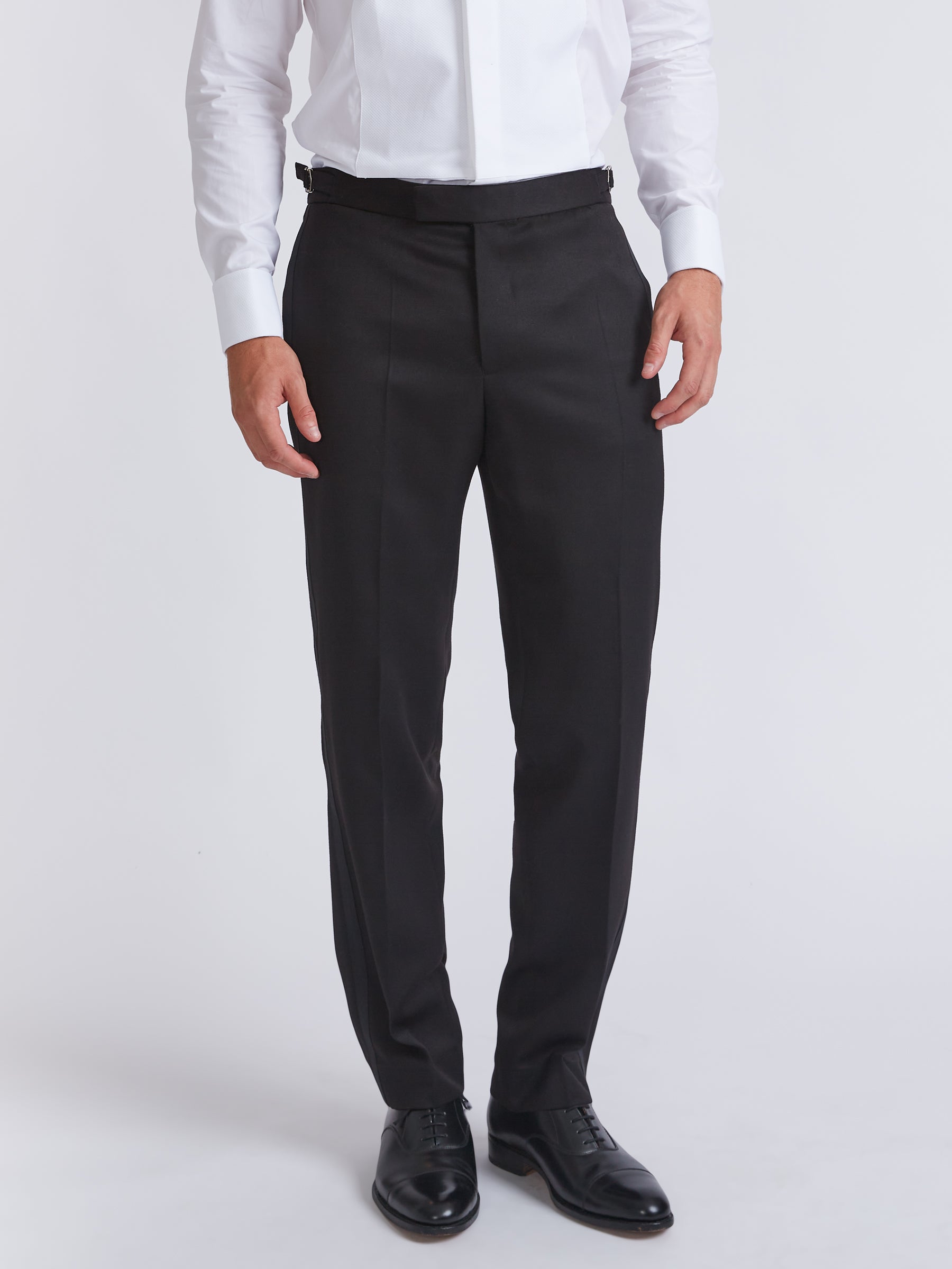
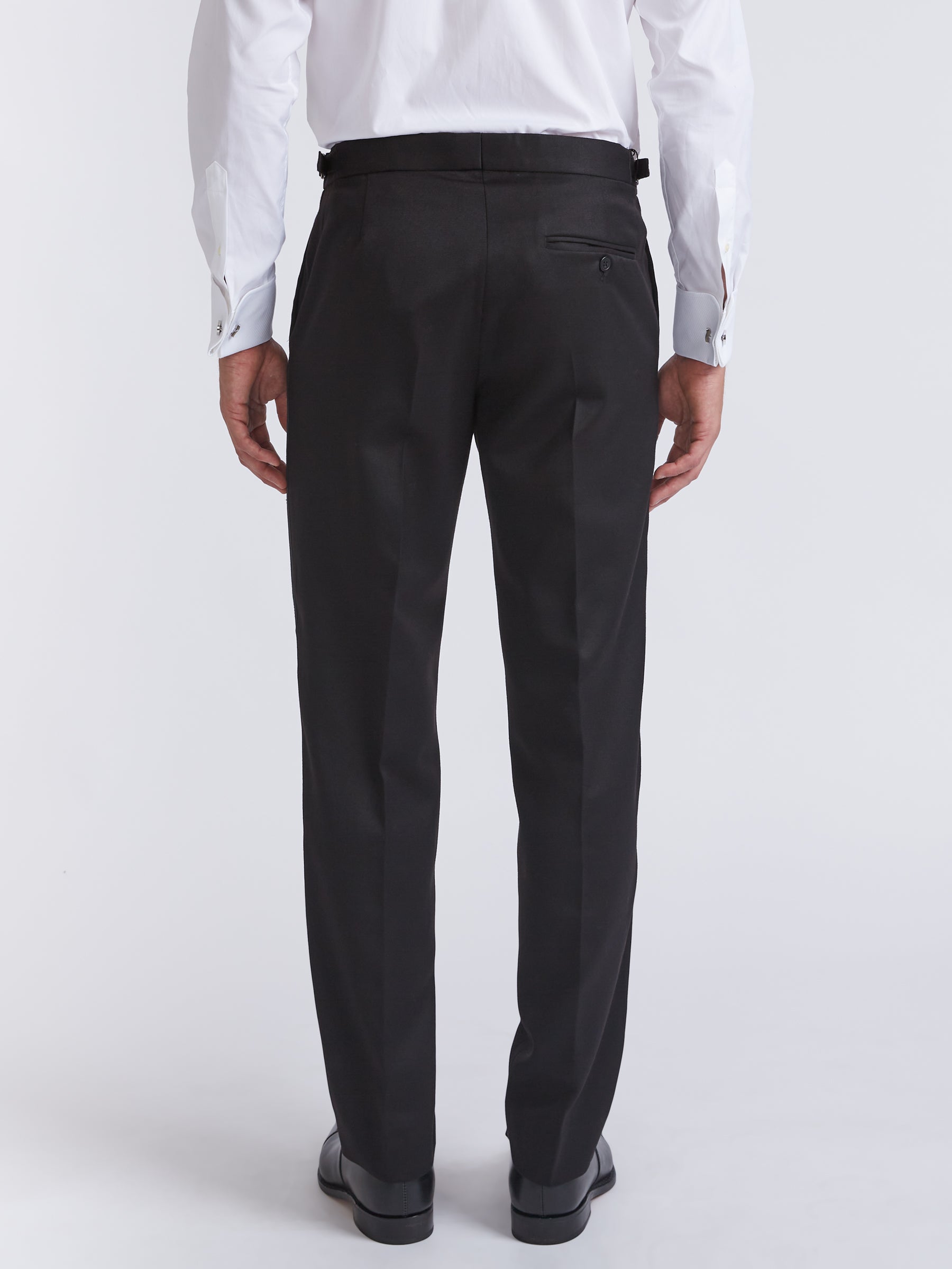
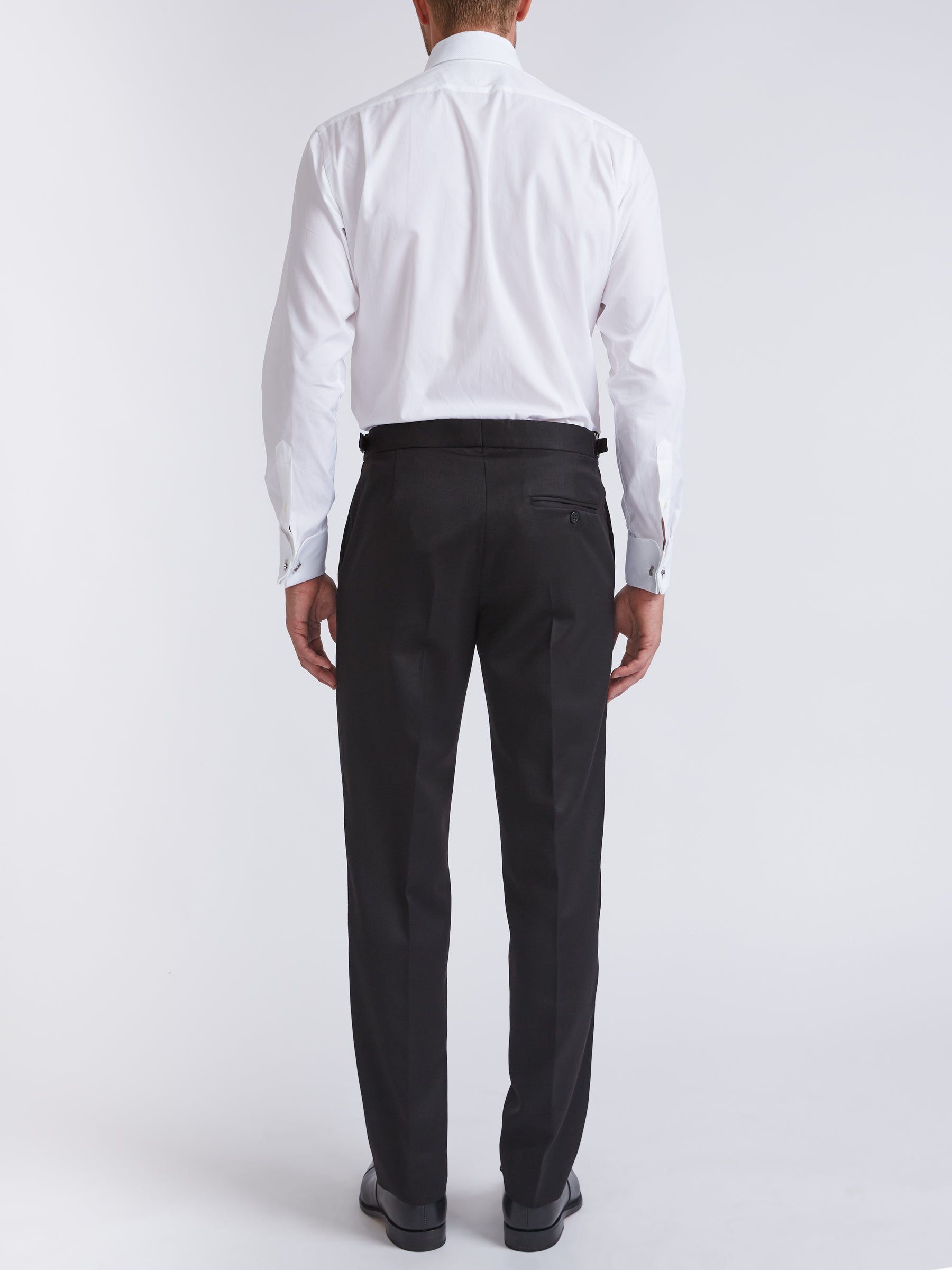
Belts tend to interrupt the clean line of formalwear and often force trousers to sit lower than intended. Braces allow the trouser to hang correctly from the shoulder, which is why traditional morning trousers and black tie trousers are designed with brace buttons or side adjusters instead.

There is also a practical reason. Weddings and formal events are long affairs. One should be able to sit, stand, eat and dance without constantly readjusting one's waistband.
Proper braces solve this elegantly.
Pleats, Shape and Drape

Pleated trousers have unfairly acquired baggage over the years, largely because people associate them with oversized corporate tailoring from the 1990s. In reality, a properly cut pleated trouser is one of the most elegant forms a formal trouser can take.

Pleats create shape through the top block and allow the cloth to drape more naturally through the leg. They move better. They crease less awkwardly when sitting. Most importantly, they complement formal jackets beautifully because they soften the transition between upper and lower body.

For summer weddings especially, this softer structure feels entirely appropriate. Formal, certainly, but not rigid. The distinction matters.

This is something we think about often at Favourbrook. Formalwear should never feel theatrical unless the dress code specifically demands it. The best tailoring allows someone to feel entirely like themselves, only sharper.

Morning Dress and the Importance of Correct Trousers

Morning dress is where the trouser shape matters most.

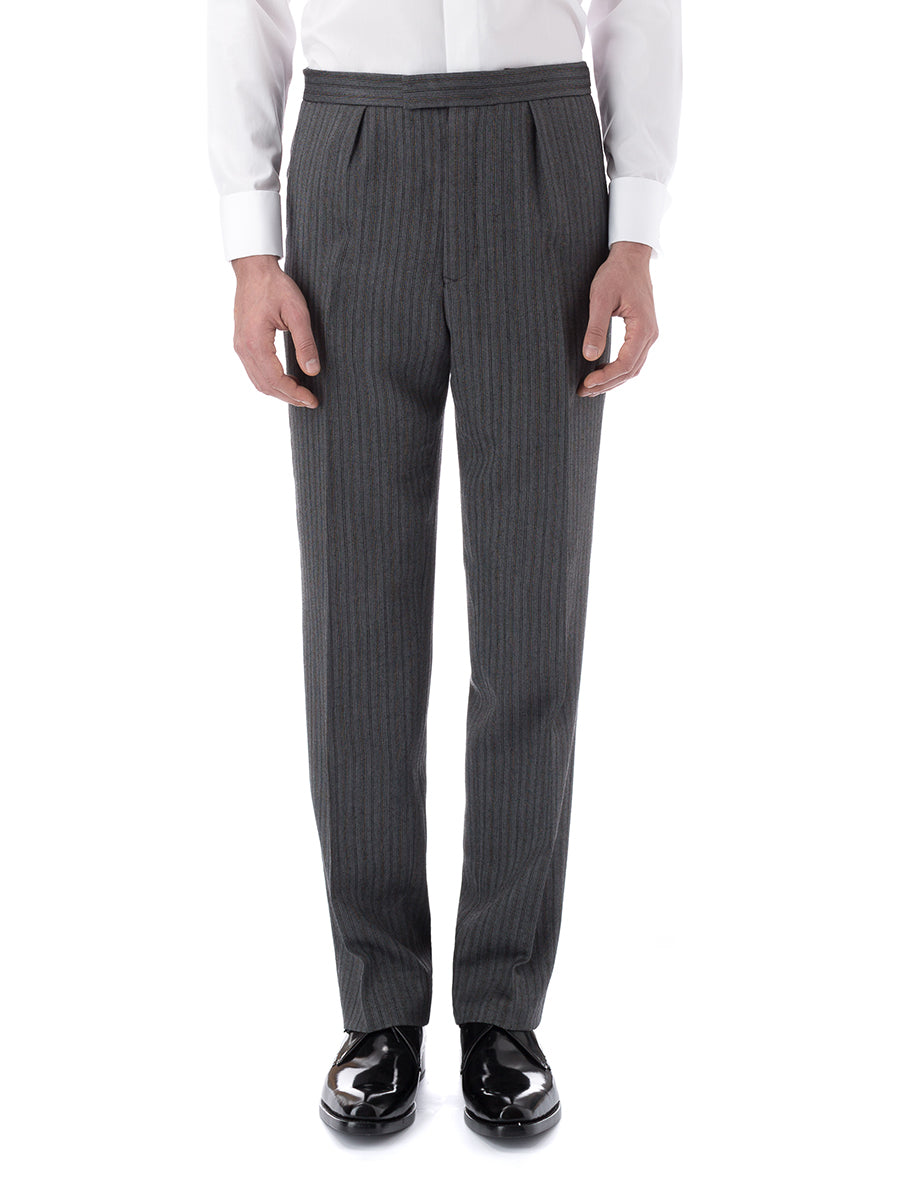
The striped trousers exist to balance the formality of the black morning coat and waistcoat. Traditionally cut with a higher rise and fuller leg, it creates the long, elegant silhouette associated with Royal Ascot and traditional English weddings.


This is also why alterations matter enormously.

A formal trouser that is too slim, too short or sitting too low immediately changes the balance of the outfit. We spend a great deal of time in-store helping customers adjust hems, brace position, waist suppression and break because small refinements make an extraordinary difference in formalwear.

It is one of the advantages of specialising in occasion dressing rather than simply offering suits seasonally. Much of what we do is rooted in helping people understand how these clothes are actually supposed to fit and feel.

Black Tie Trousers Should Look Effortless

The same principles apply to eveningwear.

Black tie trousers should sit cleanly and elegantly with very little distraction. No bunching at the shoe. No collapsing around the waist. No excessive tapering.

The silhouette should feel elongated and easy.

Even the sharpest dinner suit should retain a degree of ease. One should look ready for an evening that unfolds naturally, not as though they've been shrink-wrapped into formality.

Softer Tailoring for Modern Weddings

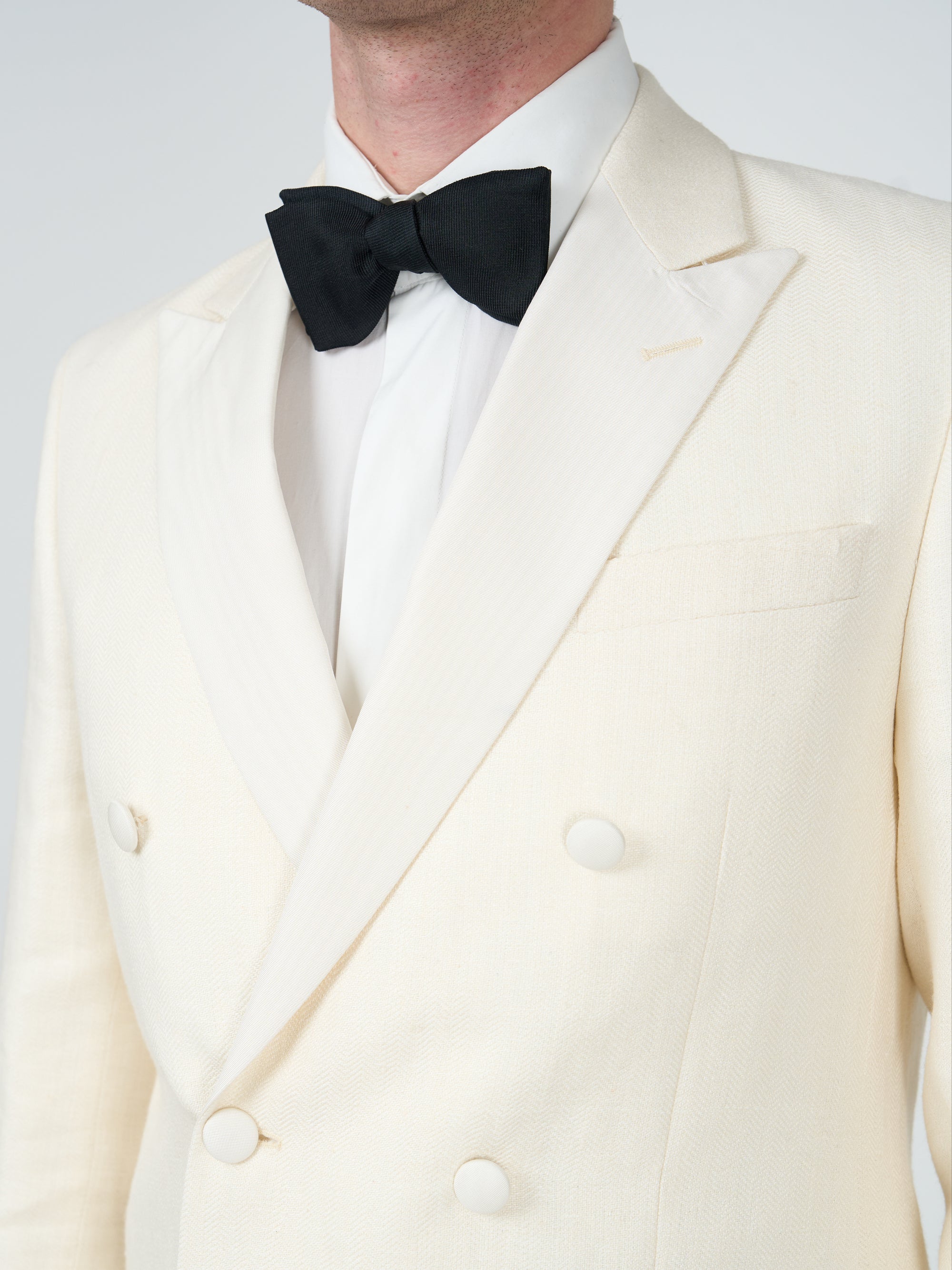
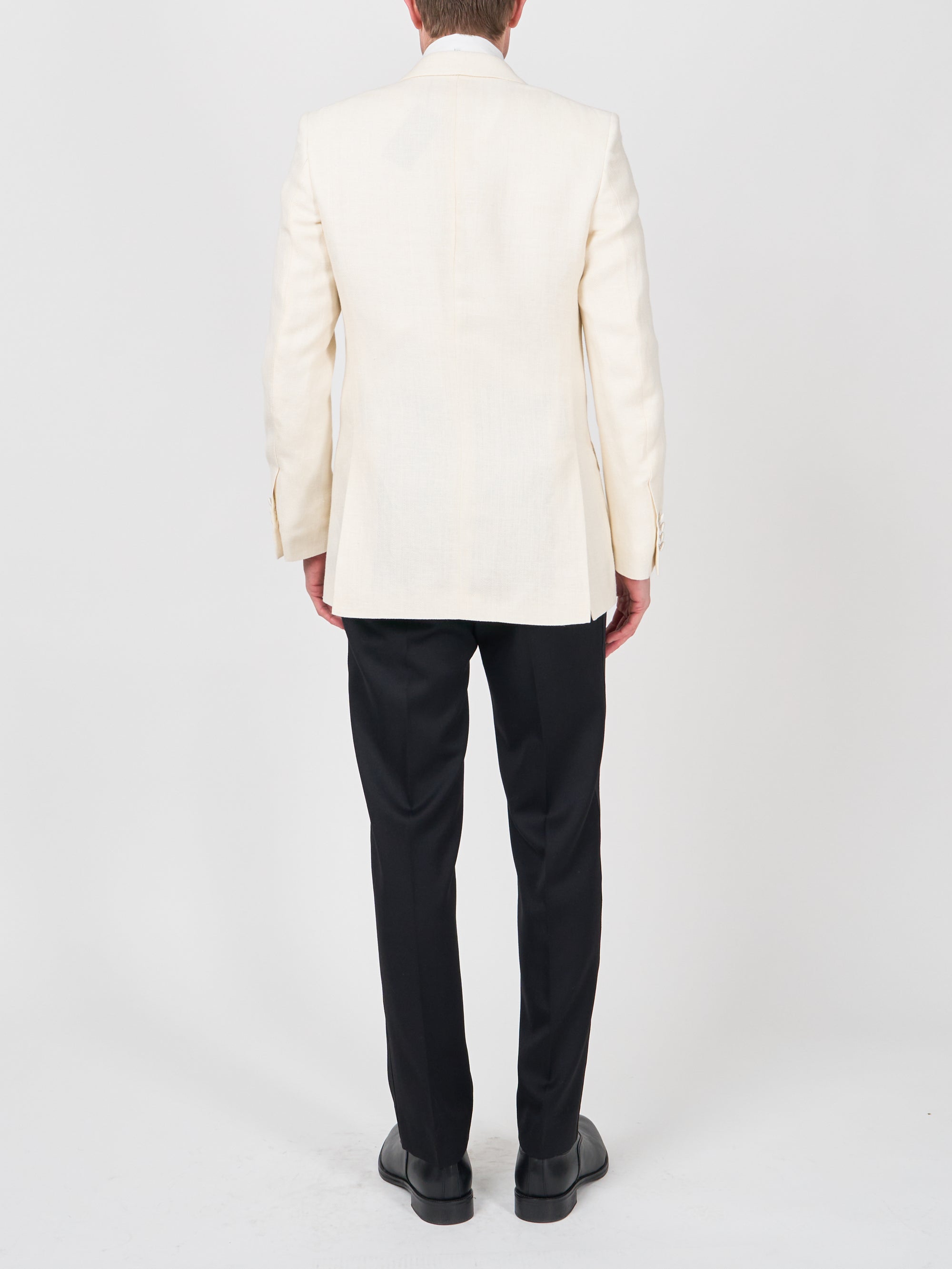
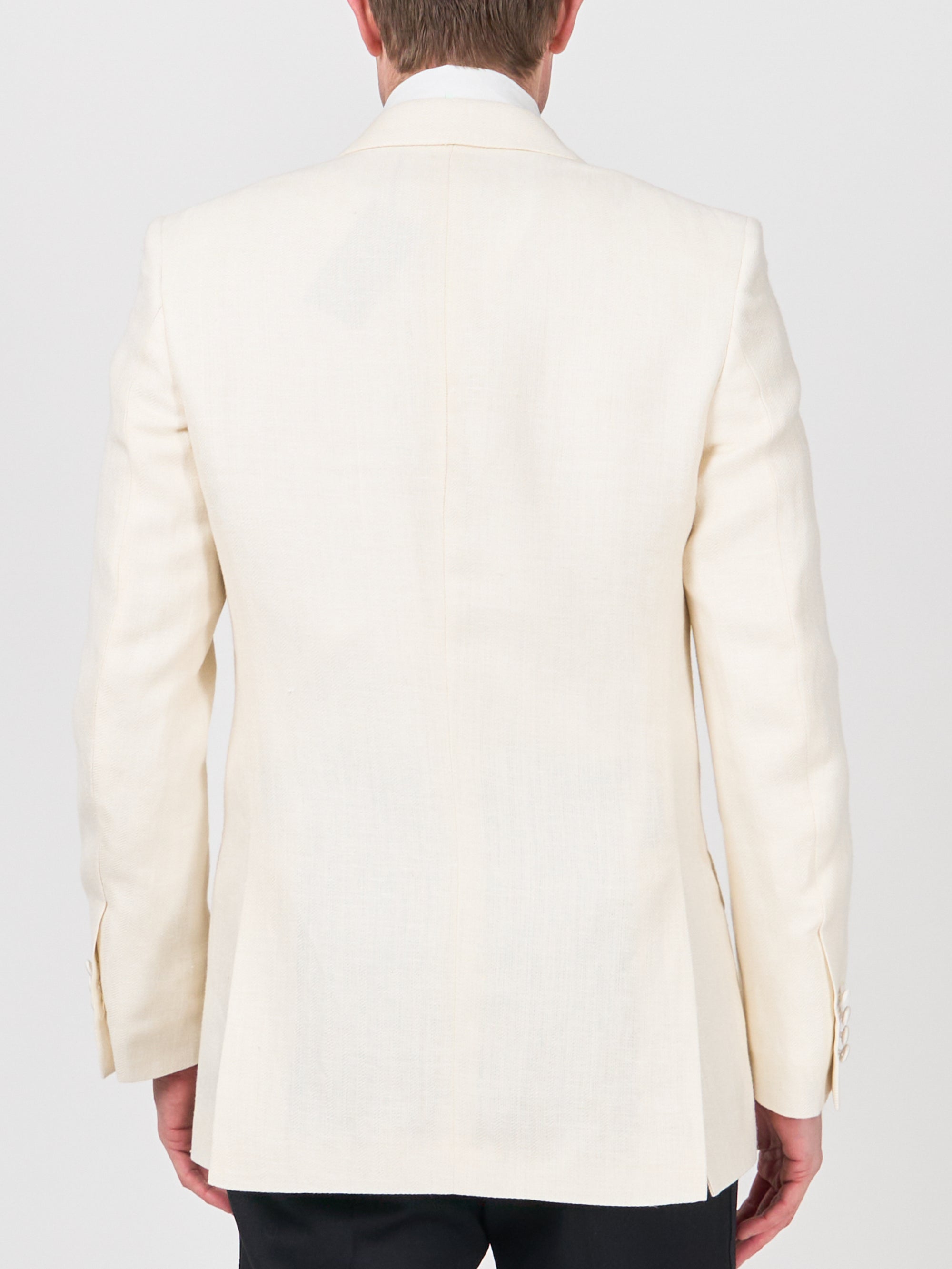
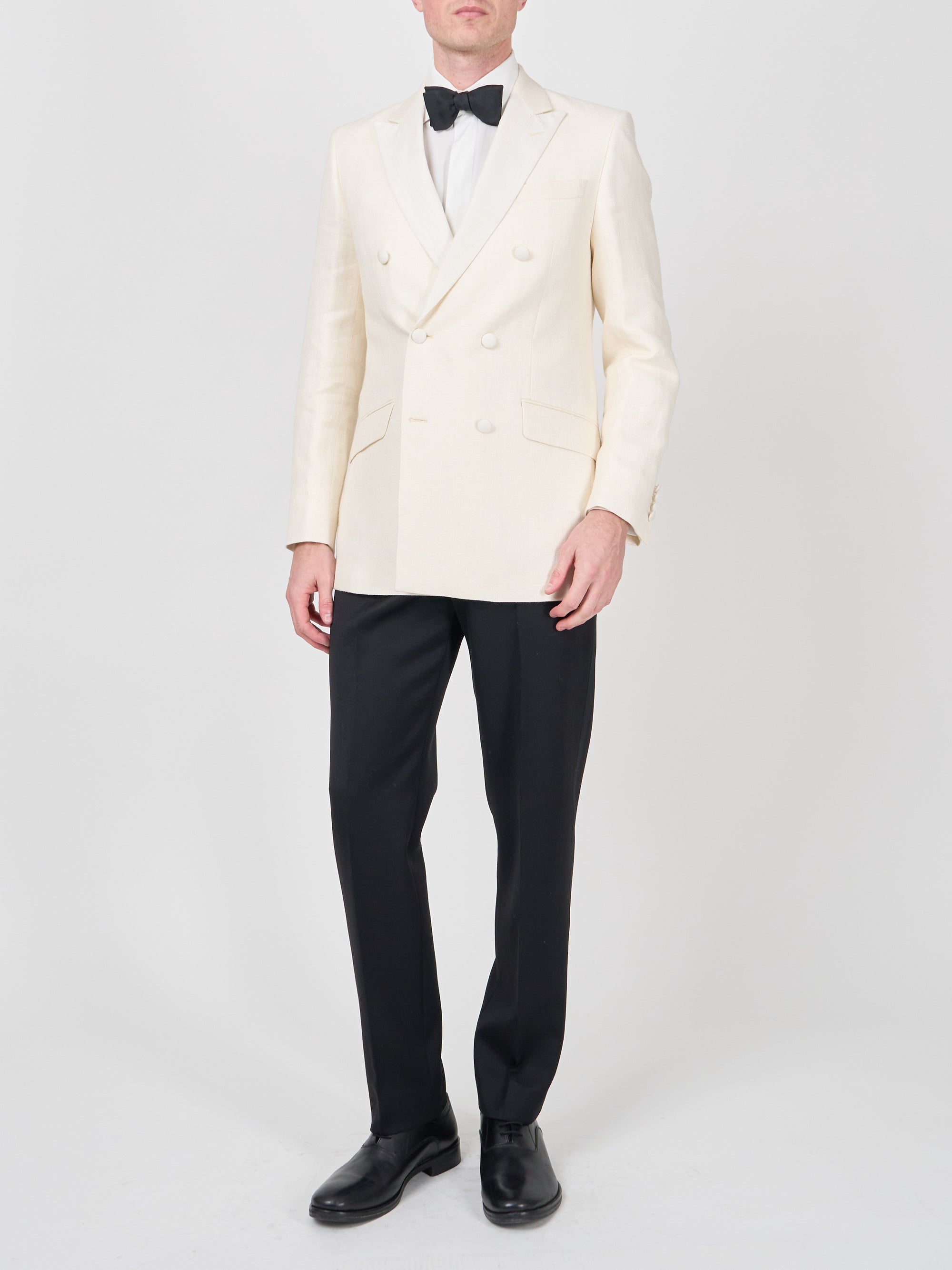
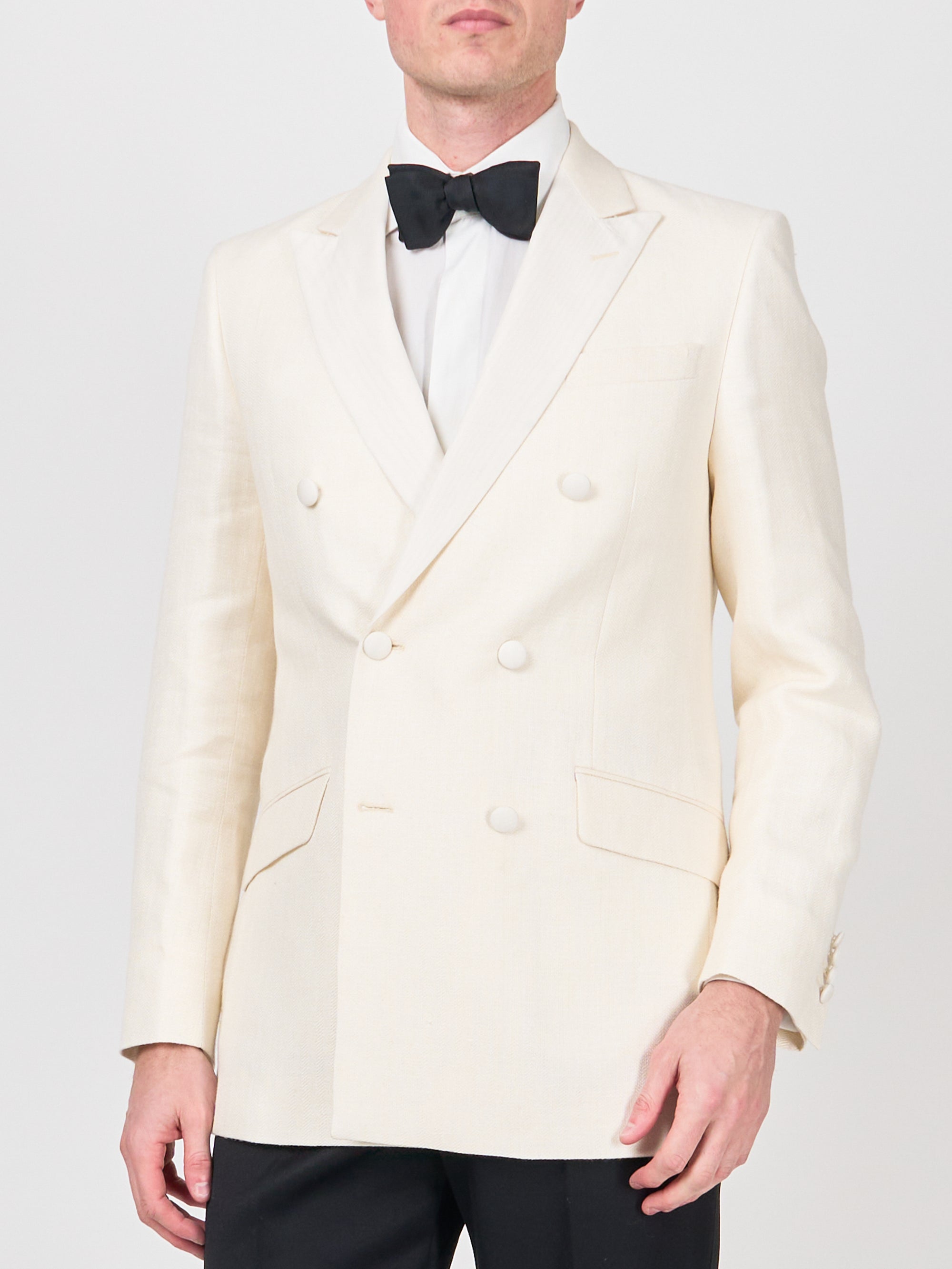
Not every wedding now calls for traditional morning dress, and modern tailoring has become considerably more relaxed in both tone and styling. Linen, lighter colour palettes and softer construction all play an important role, particularly during summer.

What remains consistent, however, is the importance of proportion.

Even with lighter fabrics and less structured jackets, the trouser still anchors the outfit. A clean line through the waist and leg keeps softer tailoring feeling refined rather than overly casual.

The Favourbrook Approach

At Favourbrook, formalwear has never been about dressing everyone identically. We are less interested in rigid rules than helping people feel properly dressed for important occasions.

Sometimes that means full morning dress with traditional striped trousers and braces. Sometimes it means a softly tailored linen suit for a wedding in Tuscany. Sometimes it is simply helping someone understand why their trousers should sit two inches higher than they are used to.

The common thread is proportion, elegance and comfort. Clothes designed to move properly, photograph beautifully and feel right from the ceremony through to the final drink of the evening.

Because the best formalwear should never feel rented, forced or unfamiliar.

It should simply feel like the best version of oneself.

← Older Post Newer Post →

Leave a comment

Journal

RSS
This Winter, Live In Velvet

This Winter, Live In Velvet

There are fabrics you wear and fabrics you feel, and velvet has always belonged firmly in the second category. Discover this season's collection of velvet...

Read more
Not For Wallflowers: The Patterned Dinner Jacket

Not For Wallflowers: The Patterned Dinner Jacket

Black tie is one of the few dress codes that tells you almost exactly what to wear, which is precisely why the patterned dinner jacket...

Read more
This Winter, Live In Velvet

This Winter, Live In Velvet

There are fabrics you wear and fabrics you feel, and velvet has always belonged firmly in the second category. Discover this season's collection of velvet...

Read more
Not For Wallflowers: The Patterned Dinner Jacket

Not For Wallflowers: The Patterned Dinner Jacket

Black tie is one of the few dress codes that tells you almost exactly what to wear, which is precisely why the patterned dinner jacket...

Read more
The Black Tie Rules Worth Breaking

The Black Tie Rules Worth Breaking

Black tie might seem a prescriptive dress code, but when you know which rules to bend, it can be a whole lot of fun...

Read more
A Black Tie Guide For Ladies

A Black Tie Guide For Ladies

Black tie for ladies used to be the exclusive domain of the ball gown, but today the dress code welcomes a variety of super chic...

Read more
Favourbrook: The Founding Story

Favourbrook: The Founding Story

From a Portobello stall and leftover ecclesiastical silks, Oliver Spencer built Favourbrook: waistcoats, velvet jackets and occasionwear with romance, fun and a very London sense...

Read more
The Season Of The Waistcoat

The Season Of The Waistcoat

The feminine waistcoat is not a borrowed men’s garment. Cut for a woman’s line, in silk douppion, cotton velvet and brocade, it gives evening dressing...

Read more
Why The Waistcoat Still Does All The Talking

Why The Waistcoat Still Does All The Talking

Favourbrook began with leftover silk and a waistcoat. Thirty-odd years later the collection is still the house’s calling card: single-breasted and double-breasted, gabardine and velvet,...

Read more
The Key Fabrics For AW26

The Key Fabrics For AW26

From slubby silk douppion to gorgeously lightweight georgette via rich velvet brocades and delicate French embroidery, discover the essential fabrics that give our AW26 collection...

Read more
The Interview: Lady Fuller

The Interview: Lady Fuller

Neston Park has been home to the Fuller family for generations, and provided the setting for Favourbrook’s AW26 campaign. We sat down with Venetia, Lady...

Read more
Beyond The Dinner Jacket: Accessorising Black Tie

Beyond The Dinner Jacket: Accessorising Black Tie

Turn a great dinner suit into an outstanding ensemble with a carefully selected assortment of formal accessories.

Read more
Mastering The Classic Dinner Jacket

Mastering The Classic Dinner Jacket

There are times when a classic dinner jacket ticks all the right boxes. We'll show you exactly how to get the traditional tuxedo looking just...

Read more
The Artist’s Jacket and the Nehru: Two Silhouettes, One Collar

The Artist’s Jacket and the Nehru: Two Silhouettes, One Collar

Workwear that learned table manners: meet Favourbrook’s artist’s jacket, designed for evenings that demand character, not a dress code. 

Read more