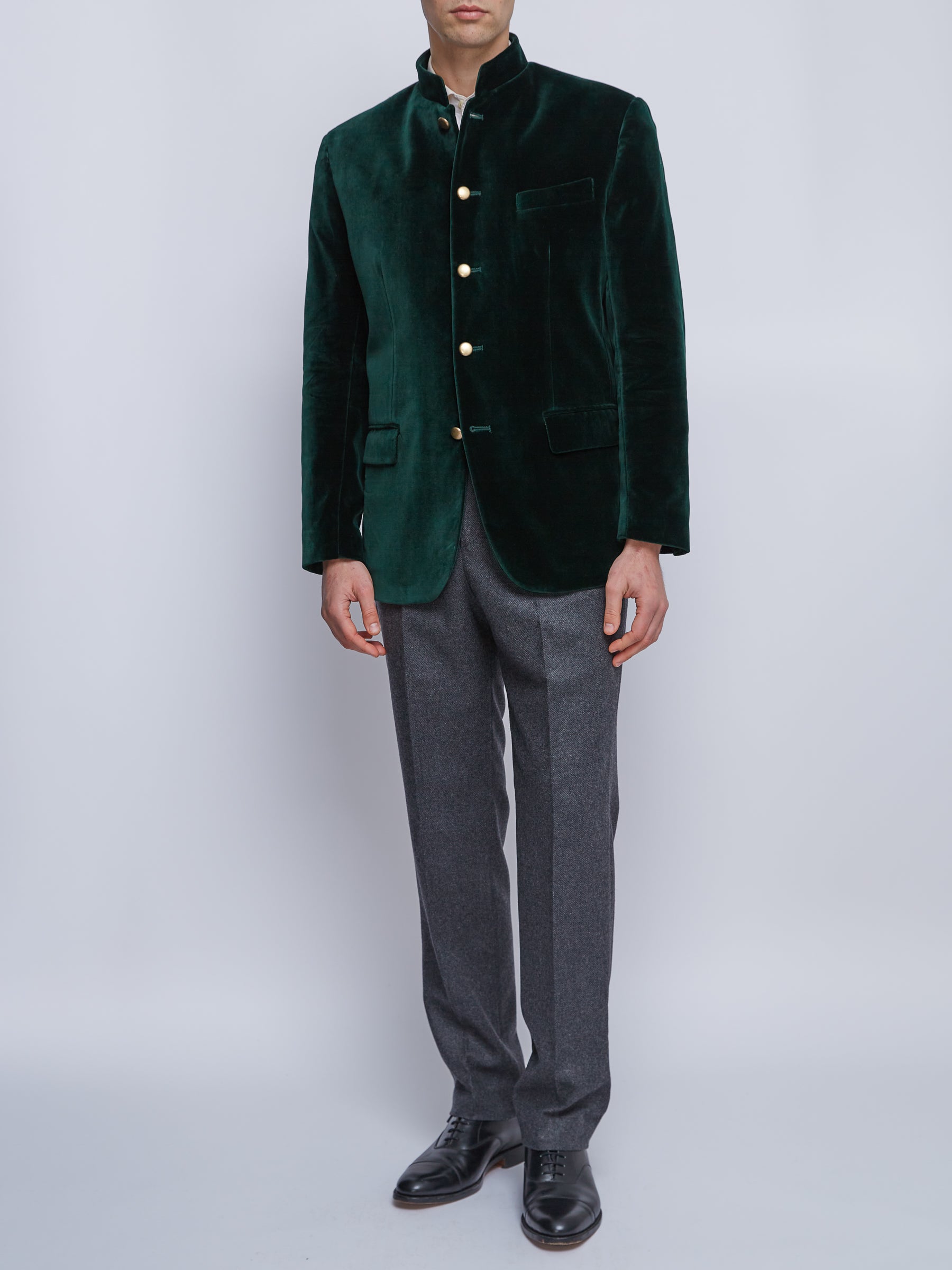
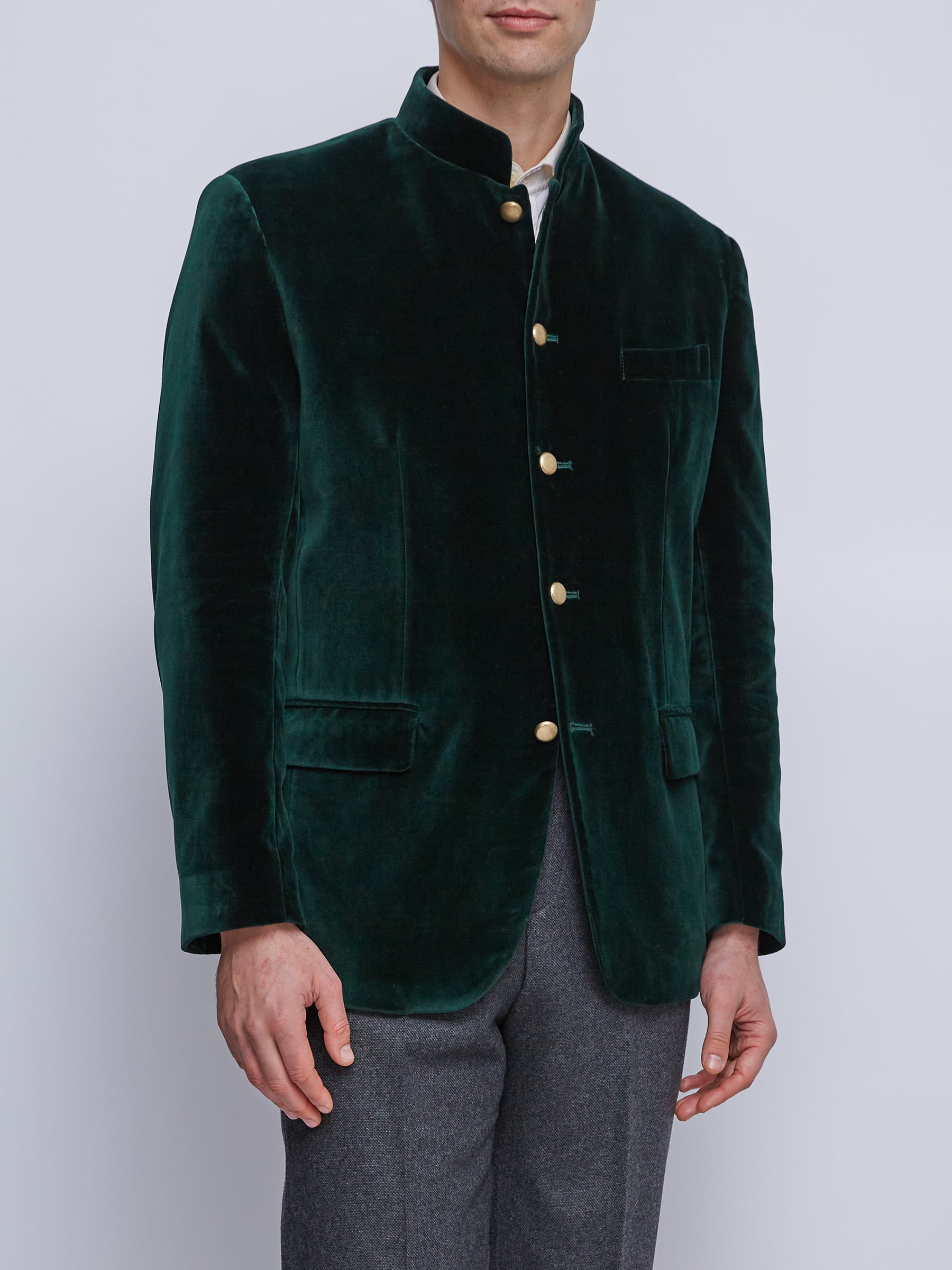
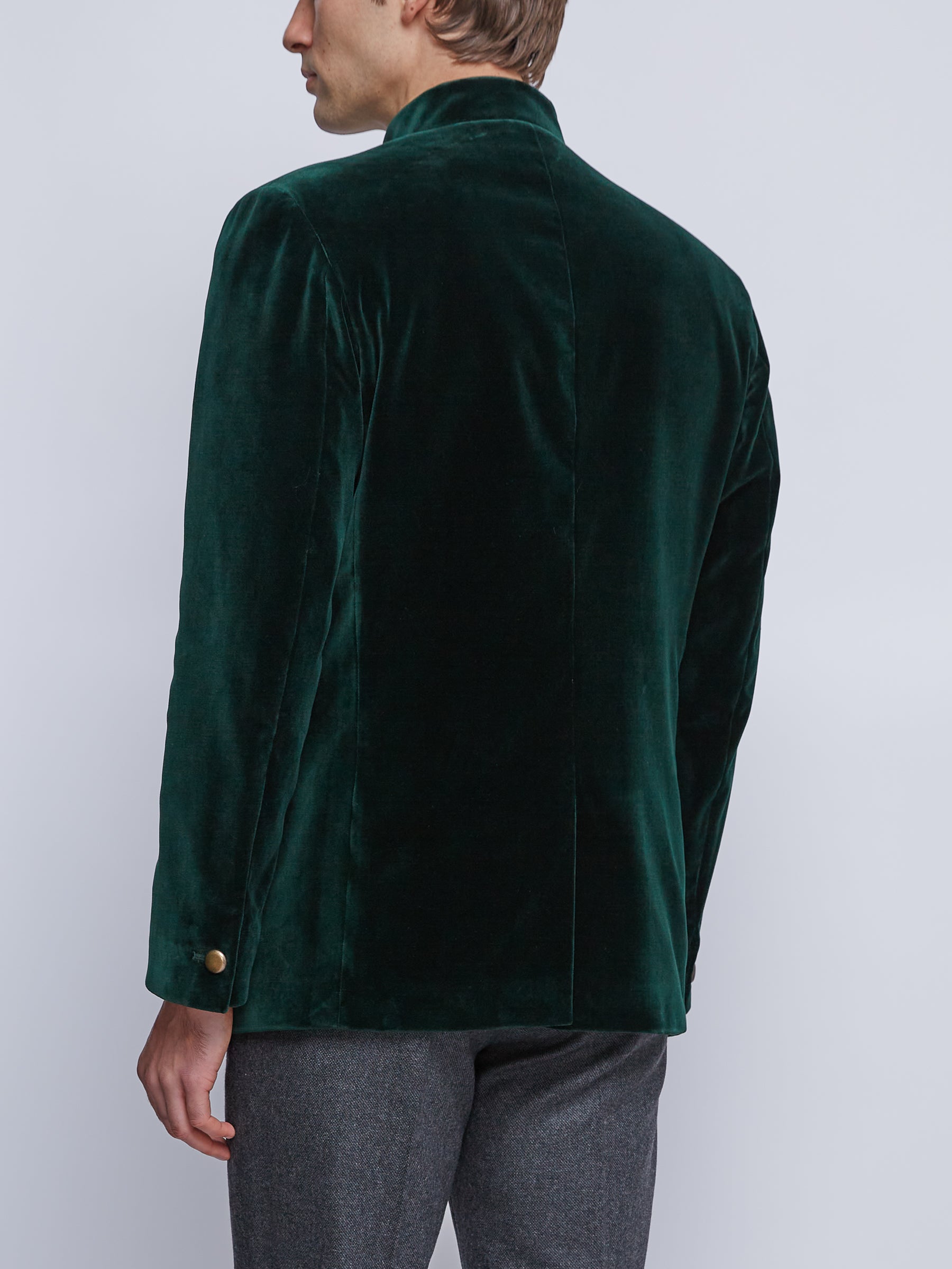
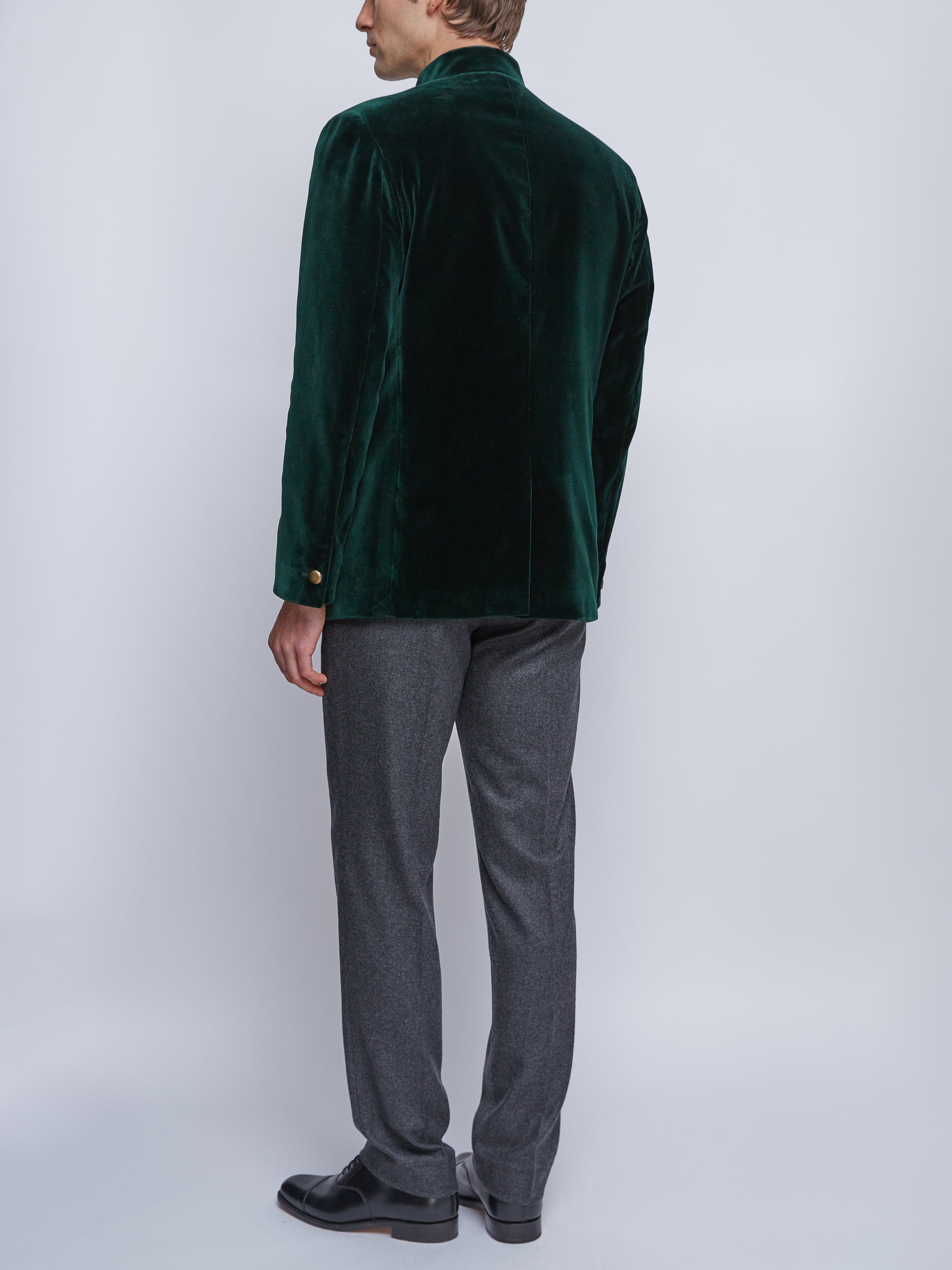
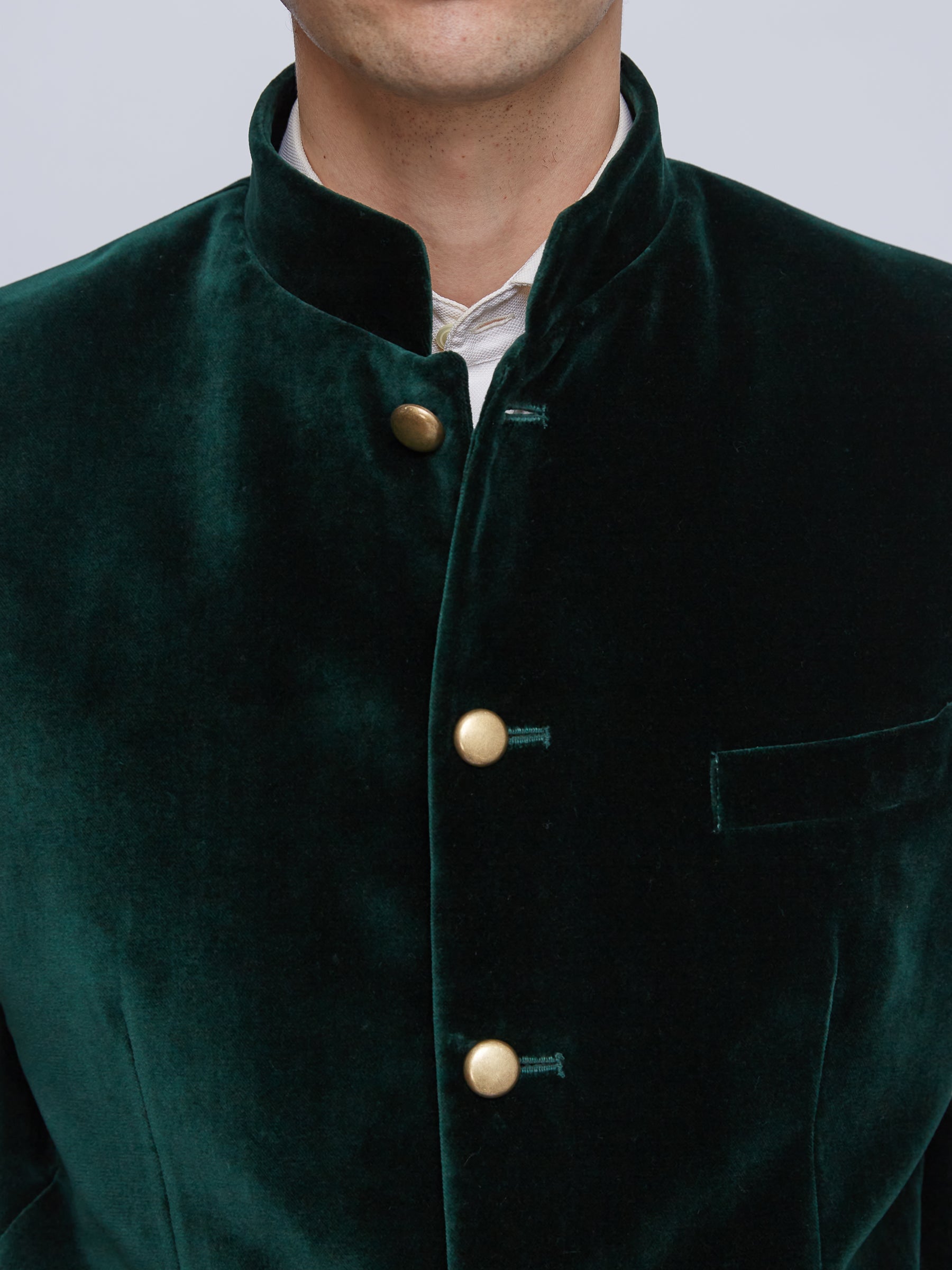
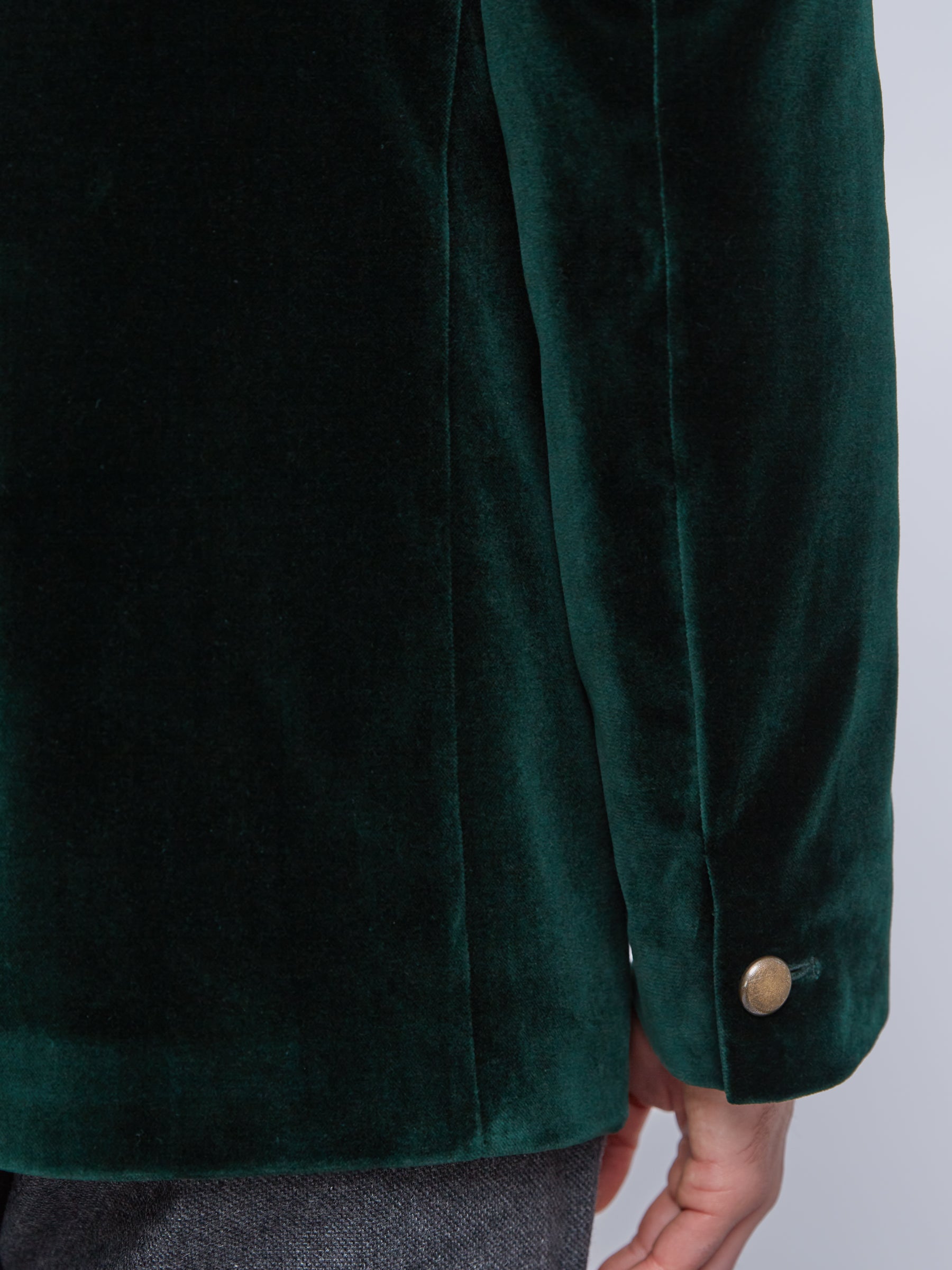
The artist’s jacket is workwear that acquired table manners. It descends from the French bleu de travail, the late-nineteenth-century chore coat of cotton drill or moleskin, cut loose for labour, pocketed for tools, dyed a hydrone blue that forgave grease stains. Painters took it into the studio; America called it a chore jacket and put it in denim. Our version keeps the unfussy, slightly shortened silhouette, then commits the necessary heresies: a refined Nehru collar, jet pockets instead of patches, antique brass buttons, a single braid loop at the cuff, midnight paisley lining. Mayfair velvet in rust, olive and navy gives it evening weight. Velvet cotton in olive and sapphire is a shade more tactile. Black Newbridge corduroy is the most workmanlike, and therefore the most subversive after dark. Hembridge linen in stone and sage is the summer diplomat.

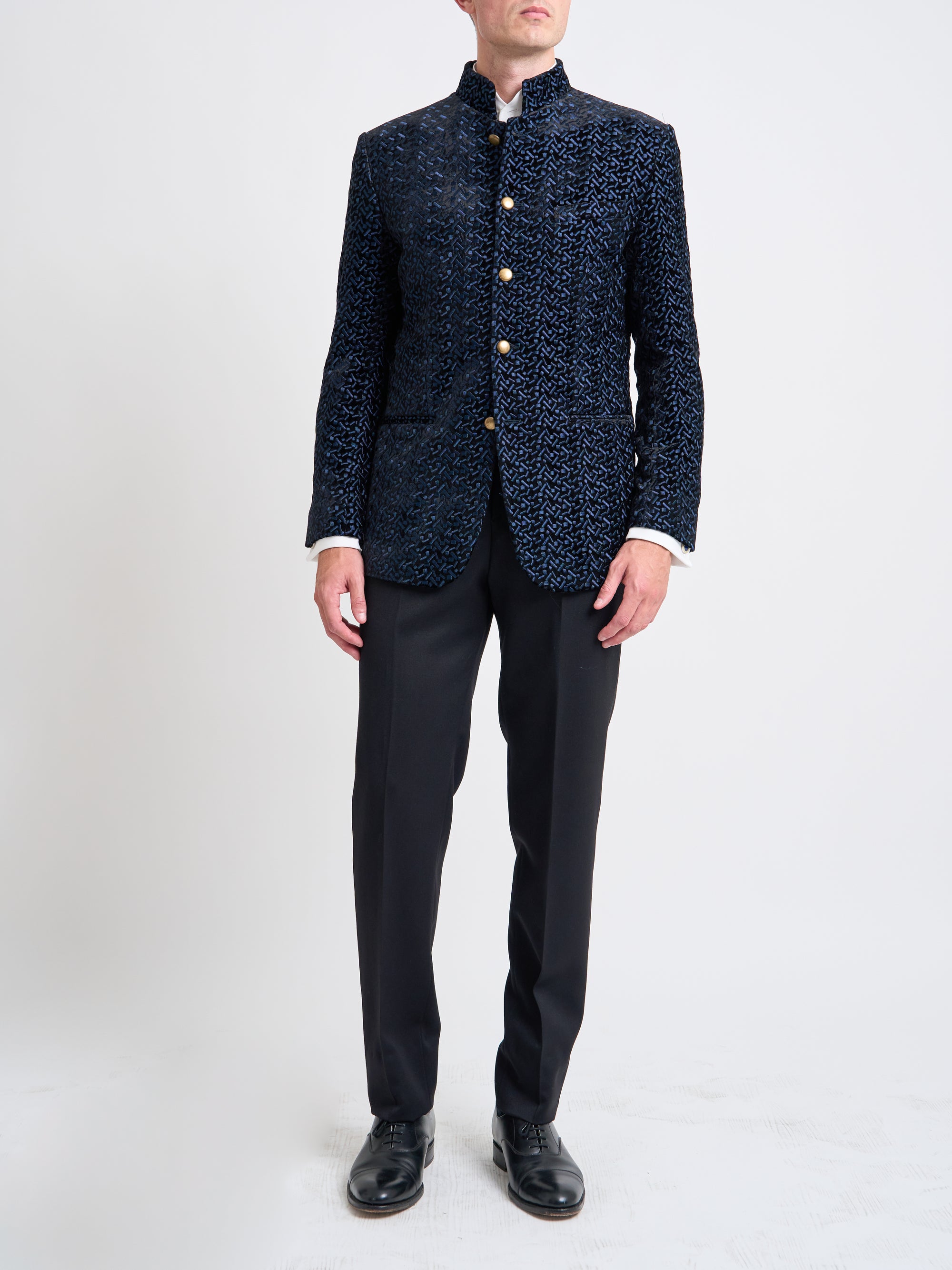
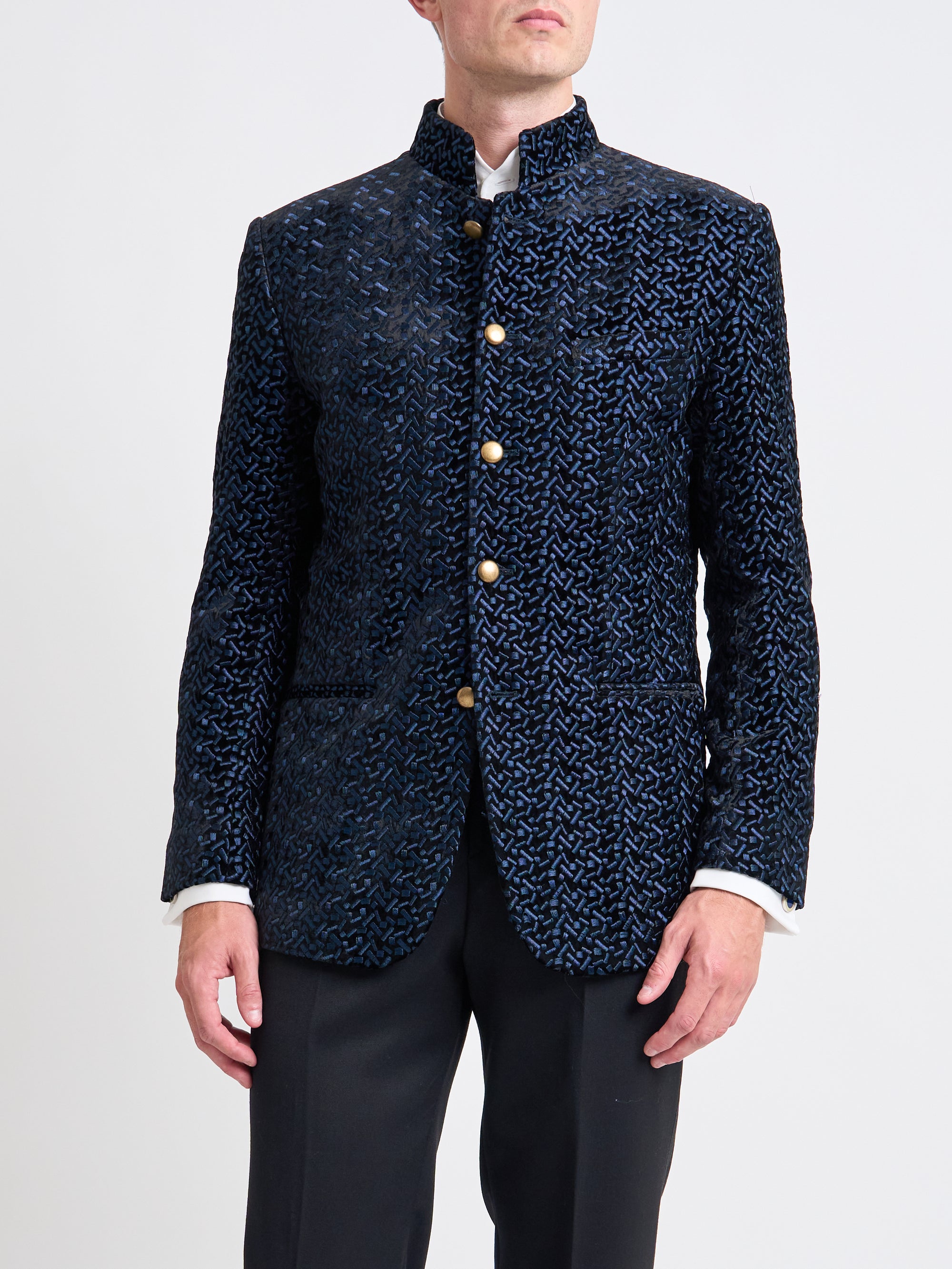
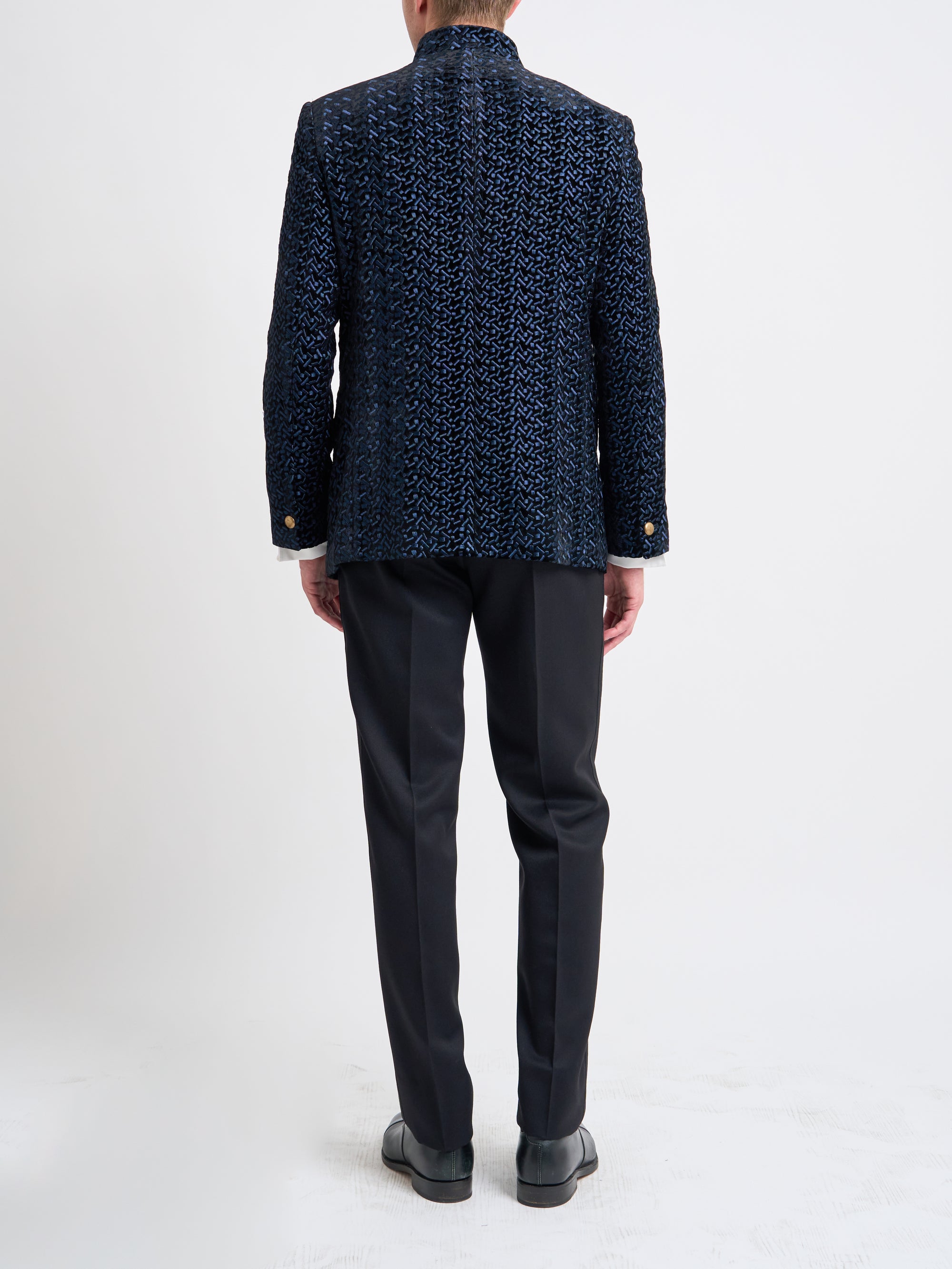
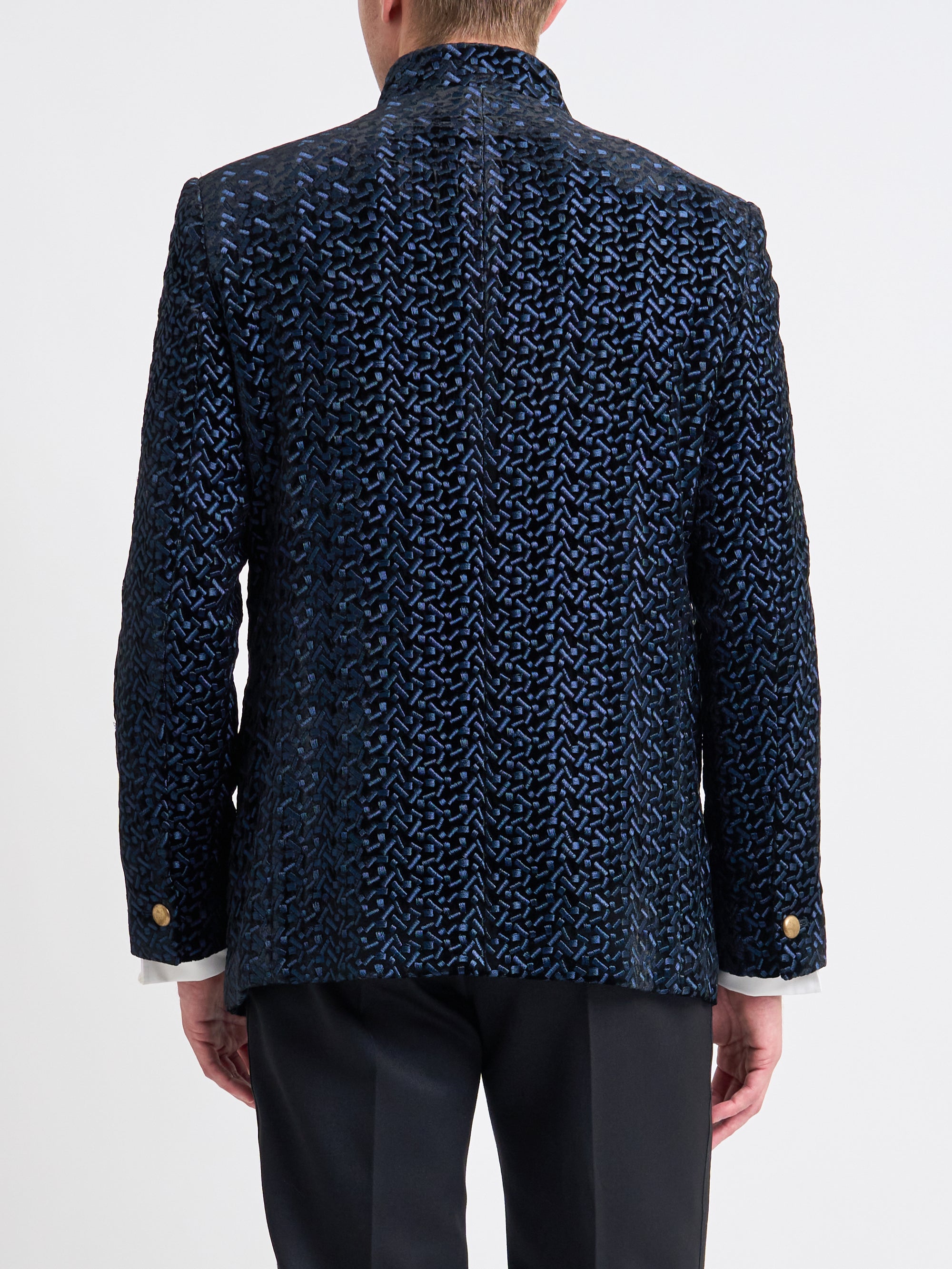
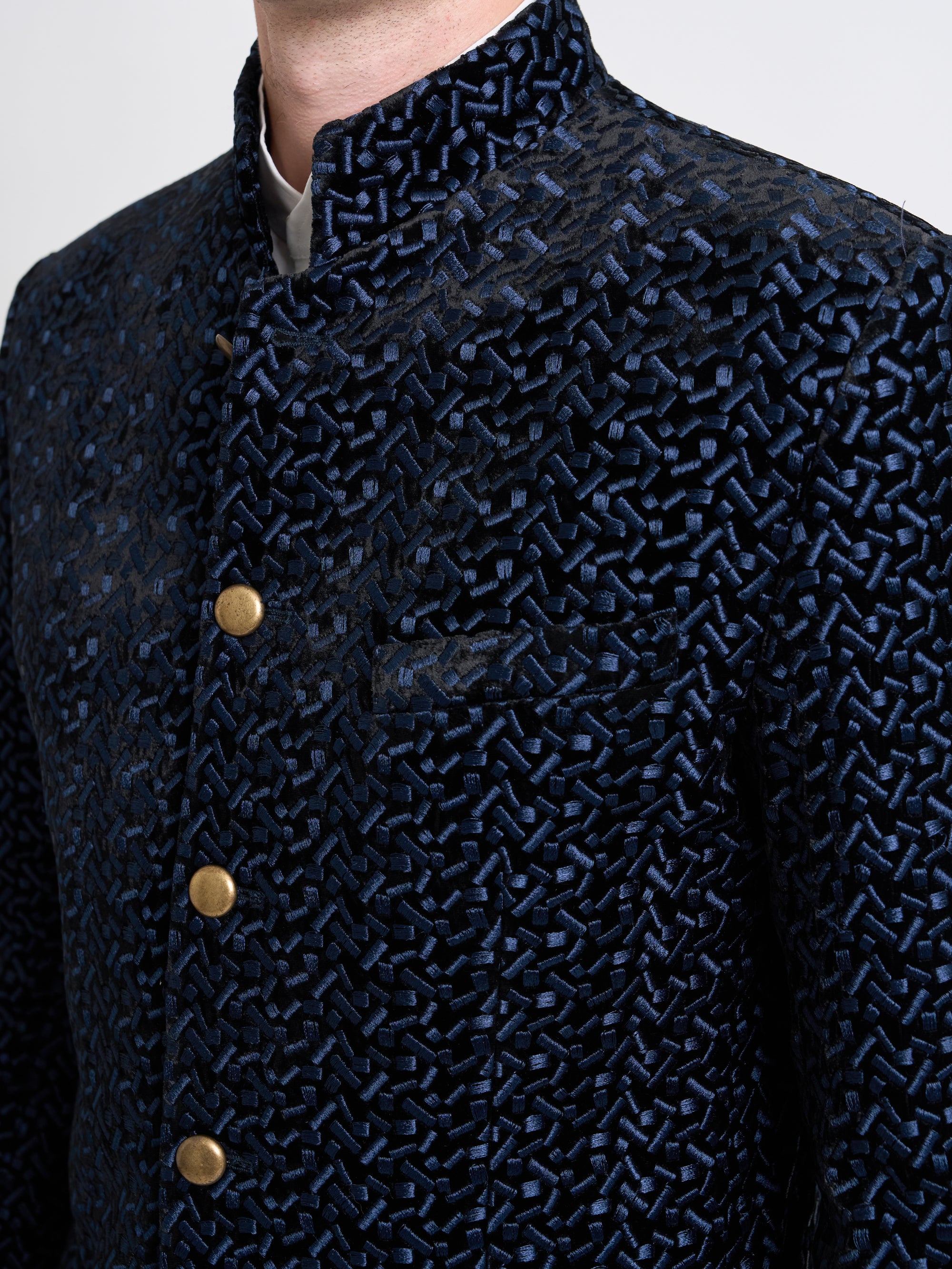
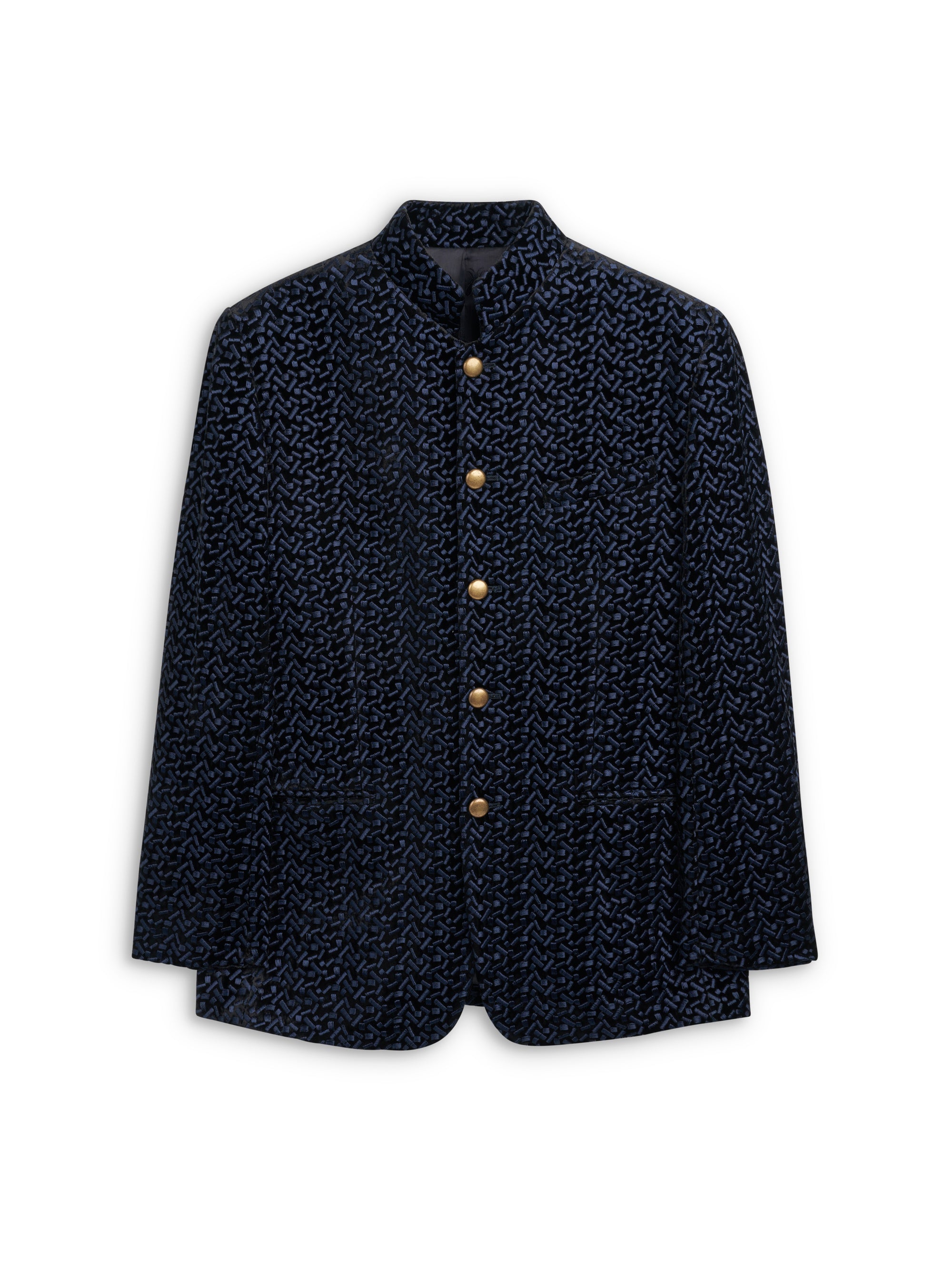
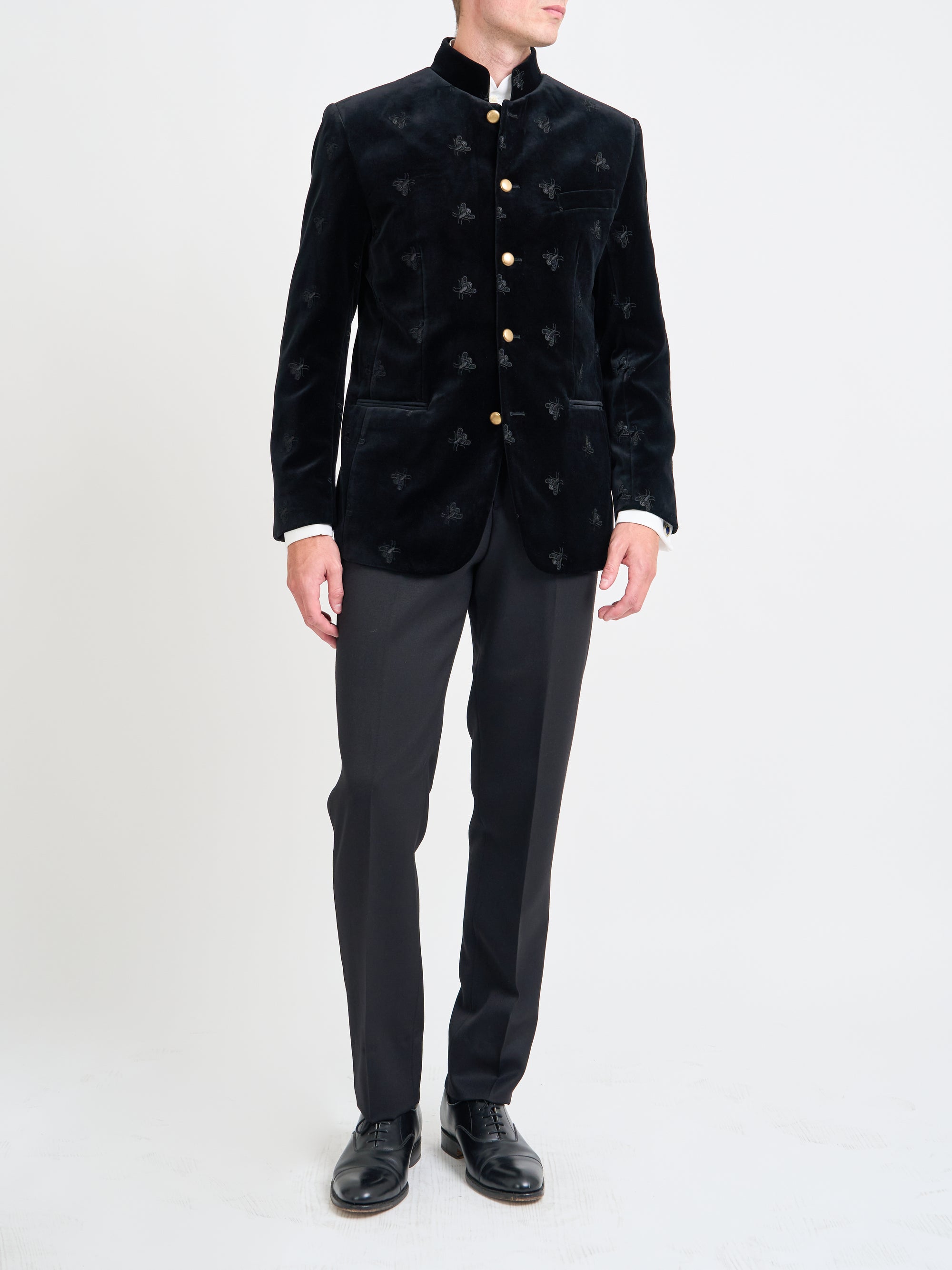
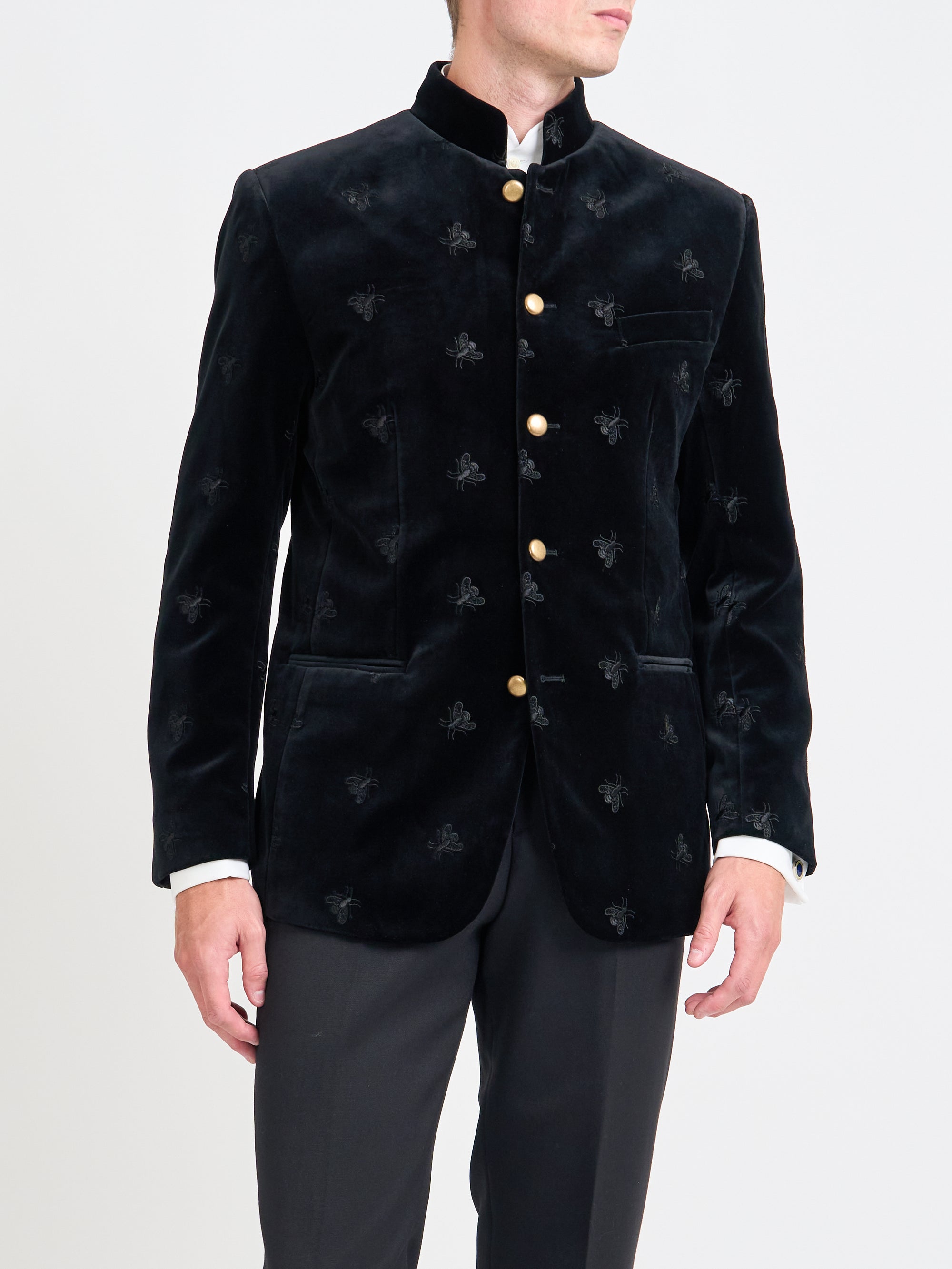
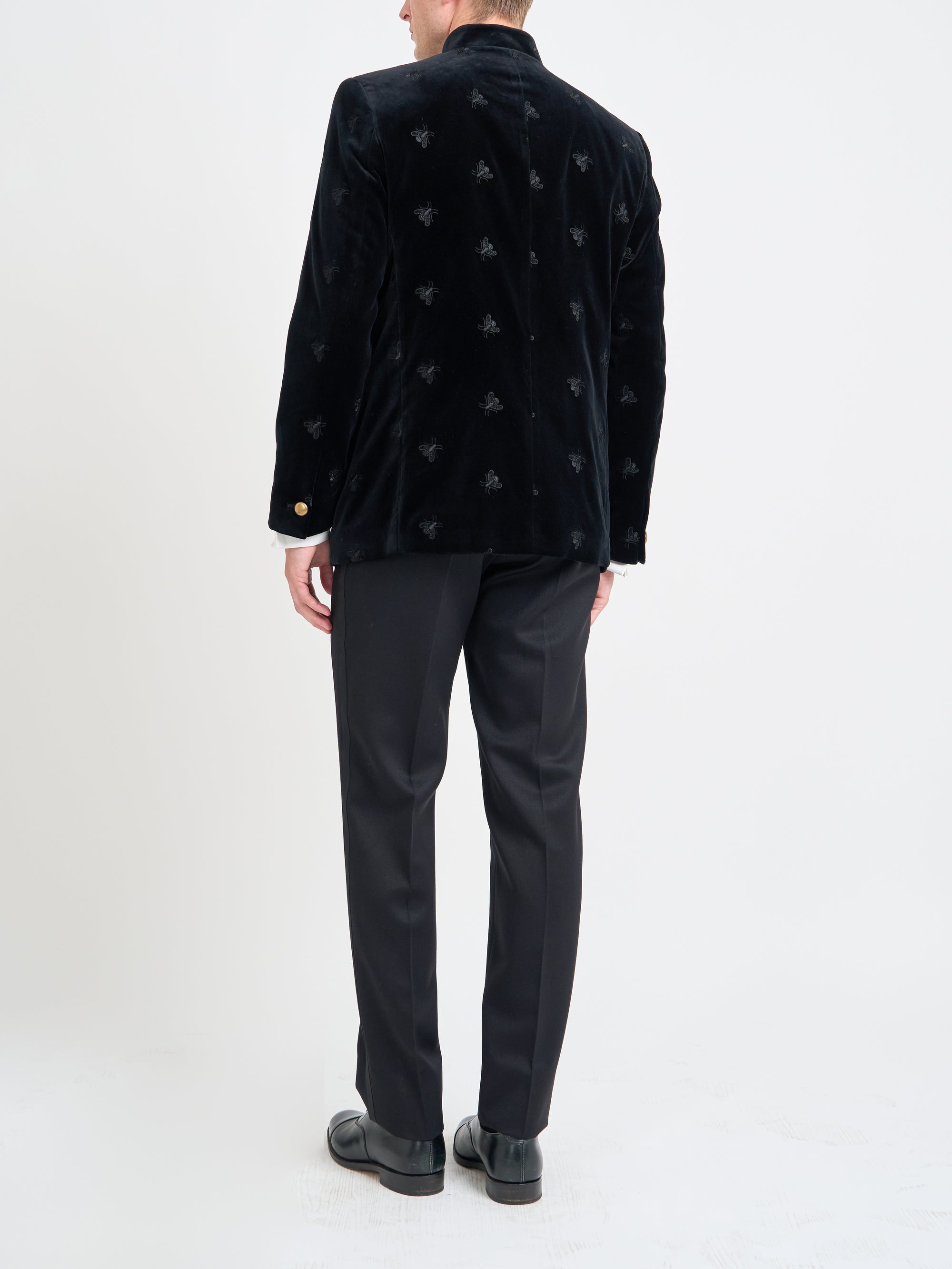
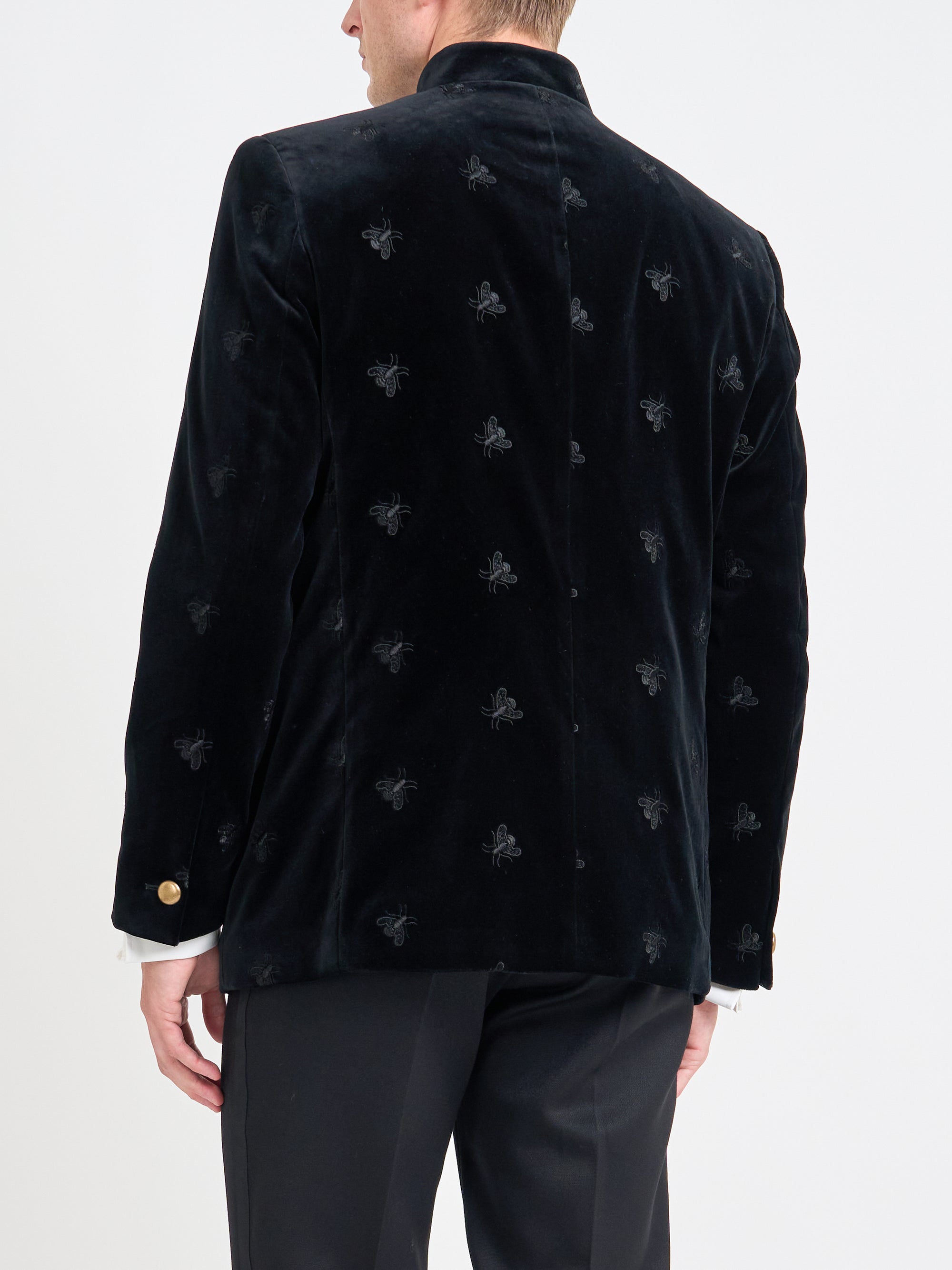
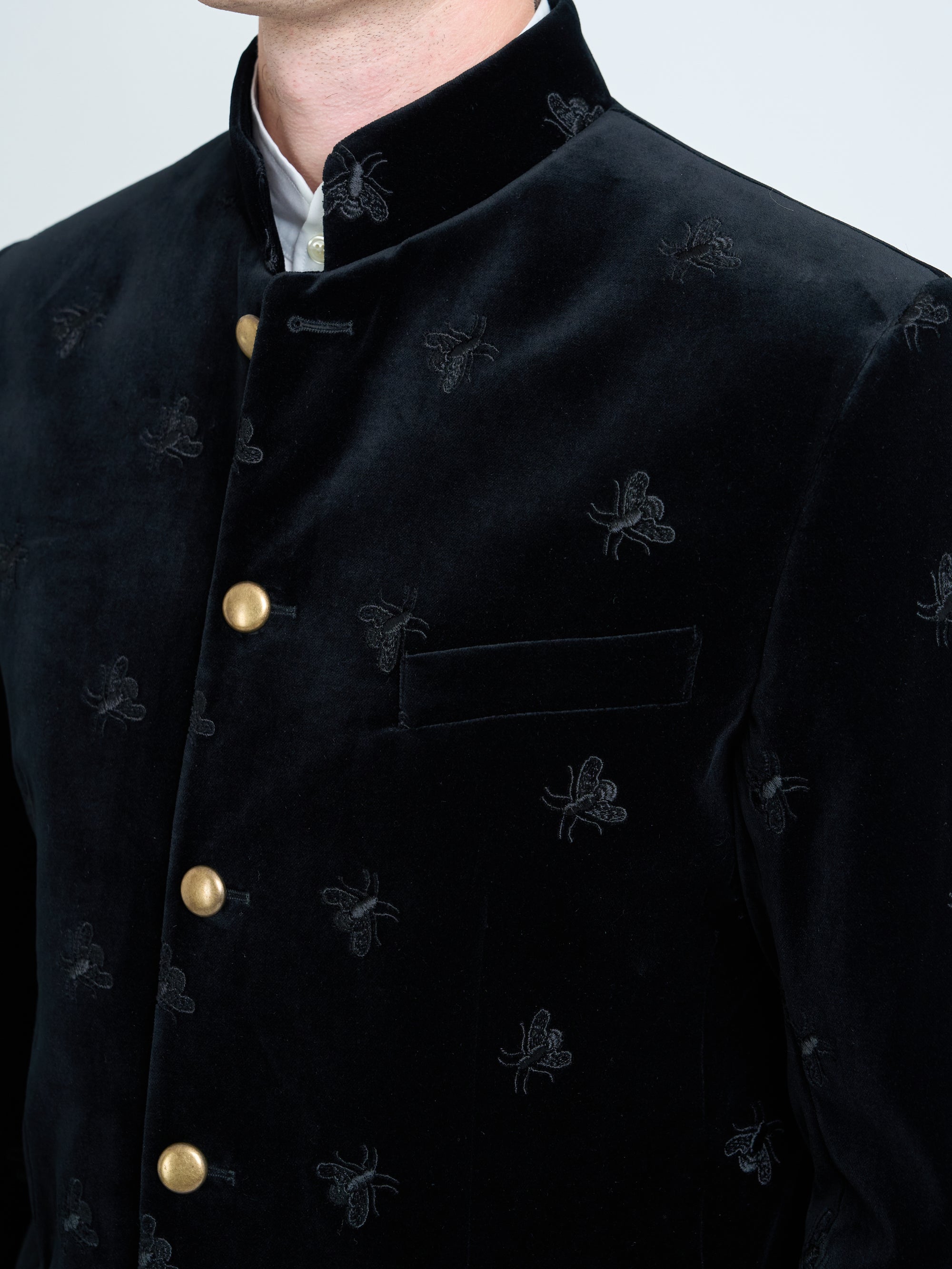
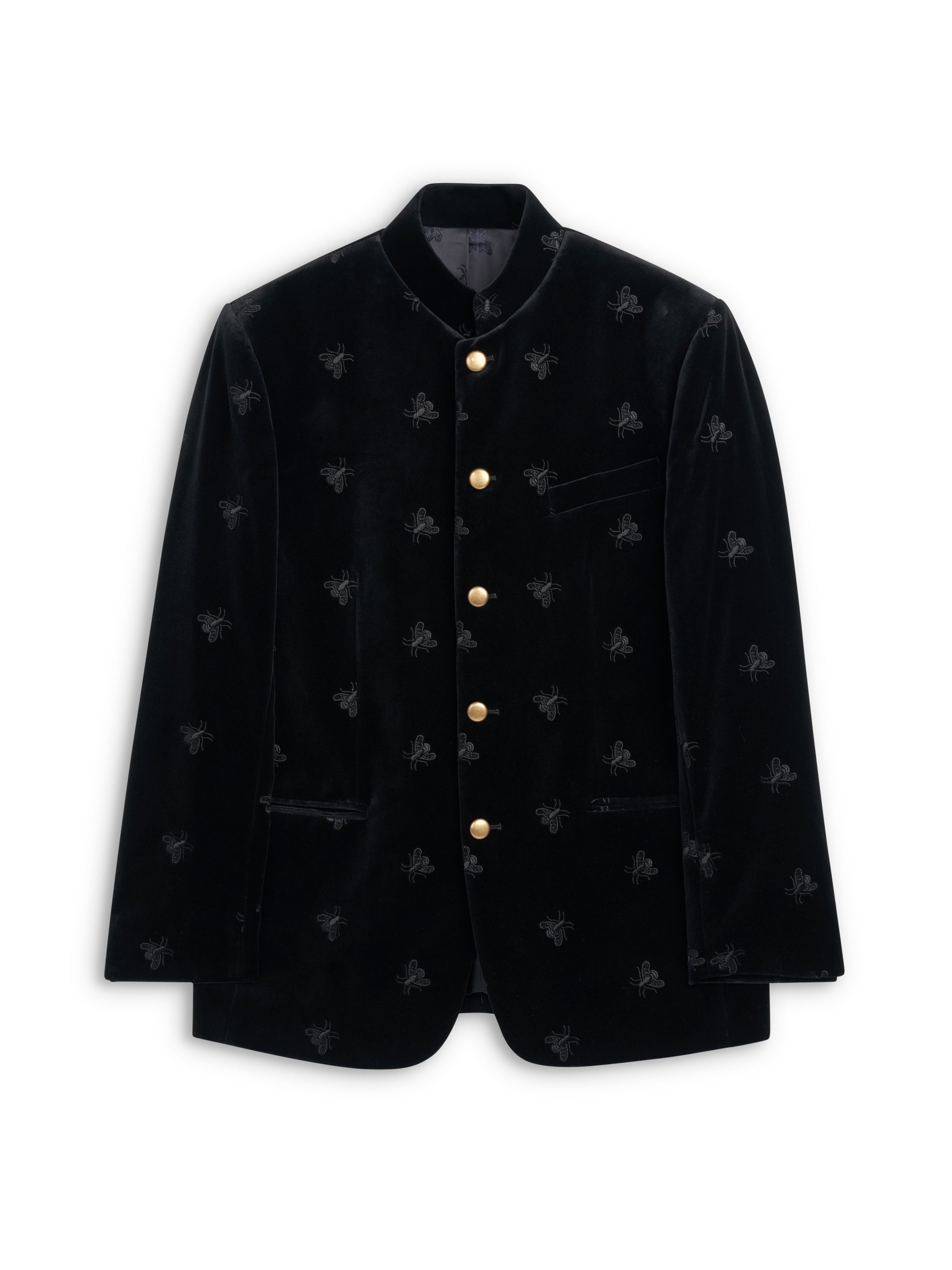
The Nehru jacket arrives from another continent. Borrowed from Indian formal dress and named, in the West, for a prime minister who understood the politics of a clean line, it is slimmer, more vertical, more deliberate. We cut it primarily in velvet because velvet is light enough for the in-between seasons while being beautifully rich for winter. There are cashmere-wool versions for those who want substance without shine; a Hampton wool option in black for the man who prefers his rebellion in hushed tones; and the occasional swarm of embroidered bees for the man who does not. Antique brass buttons, jet pockets, paisley lining within: the house handwriting is the same.

Wear them when the invitation is a riddle. The artist’s jacket is the more casual cousin -informal dinners, galleries, the wedding that has abandoned morning dress but not yet surrendered to the polo shirt. Layer it over a roll-neck; open a shirt beneath it. The Nehru is the sharper instrument: receptions, destination evenings, any gathering where a dinner jacket would look like overdressing and a blazer would look like an afterthought. White shirt for formality; neckerchief or knit to pull it back toward day.
The point is not costume. It is judgement. Two silhouettes, one collar, and the useful reminder that formality, properly handled, is a conversation rather than a uniform.