Velvet, Decoded: How To Tell Good From Bad

Velvet, Decoded: How To Tell Good From Bad

Velvet has a reputation problem, and it isn't velvet's fault. For every jacket that glows like an Old Master after dark, there is a party-shop blazer that has gone bald at the elbows by Boxing Day. Same name, very different cloth. Before you buy, here's how to tell them apart.

Start with the pile

Velvet is woven as two cloths face to face, joined by pile threads that are then cut apart, leaving countless upright fibres. Good velvet packs them in densely: part the pile with your fingers and you shouldn't see the backing beneath. Thin velvet shows its ground cloth, and with it, the corners that were cut.

Then press it

The simplest test is your thumb. Press firmly into the pile and let go. Good velvet springs back almost at once, while poor velvet holds the print like wet sand. That resilience keeps a jacket fresh after an evening of sitting, dancing and leaning on the bar.

Watch the light

Velvet's depth comes from the way its pile catches light at different angles. On a good cloth, the shading shifts evenly as you move; patchy sheen, streaks or thin spots suggest an uneven pile.


Know your fibres

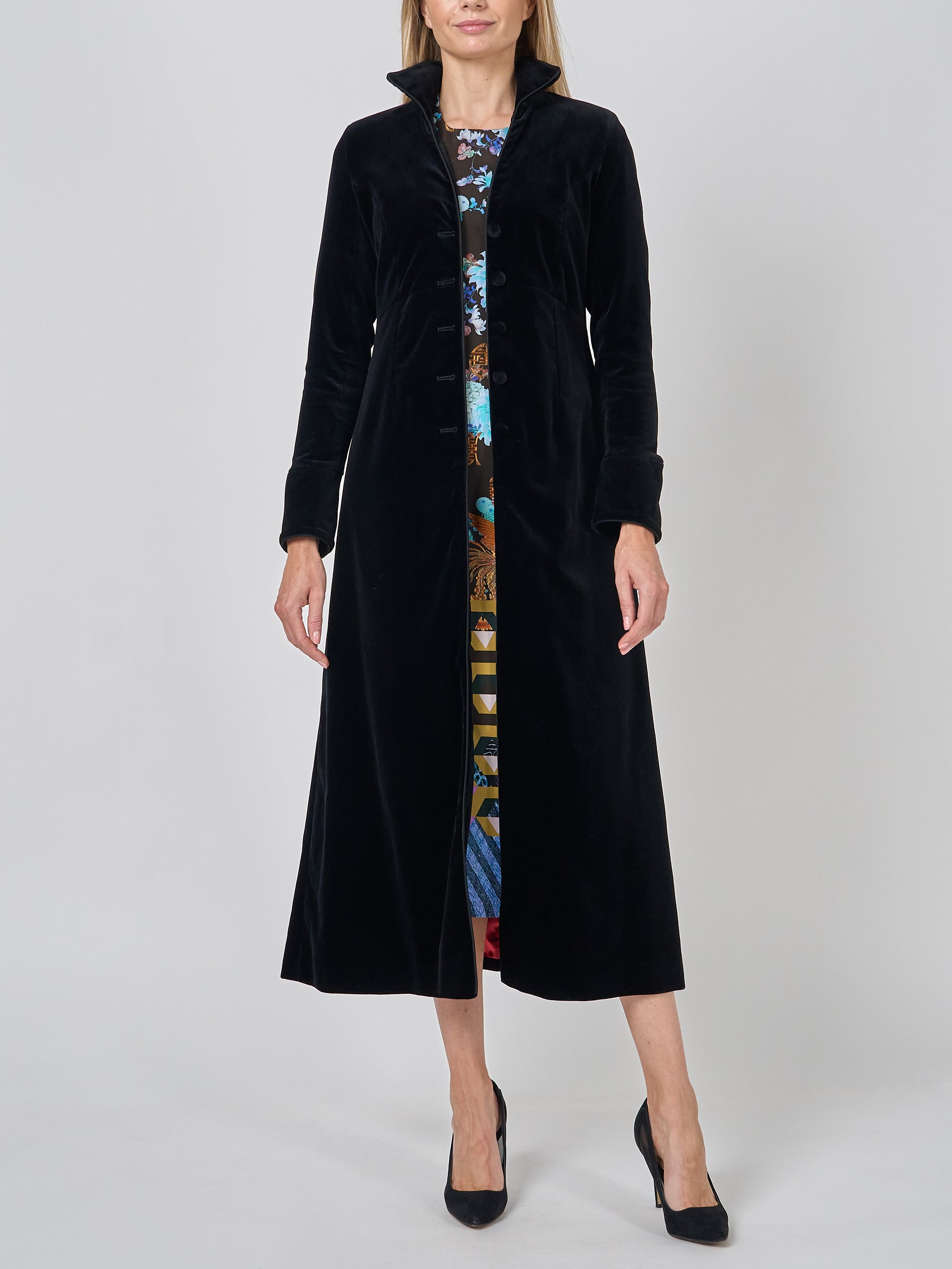
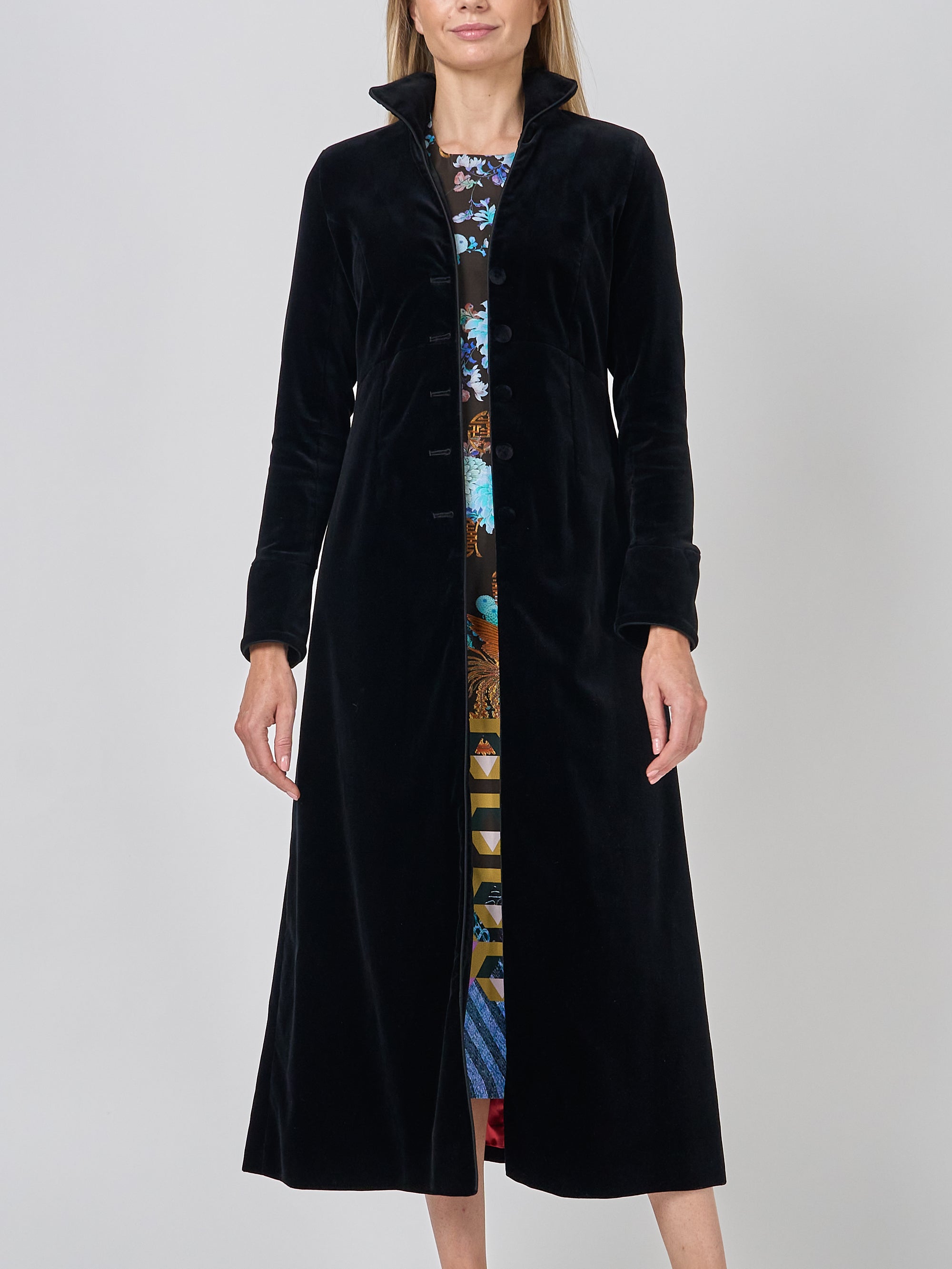
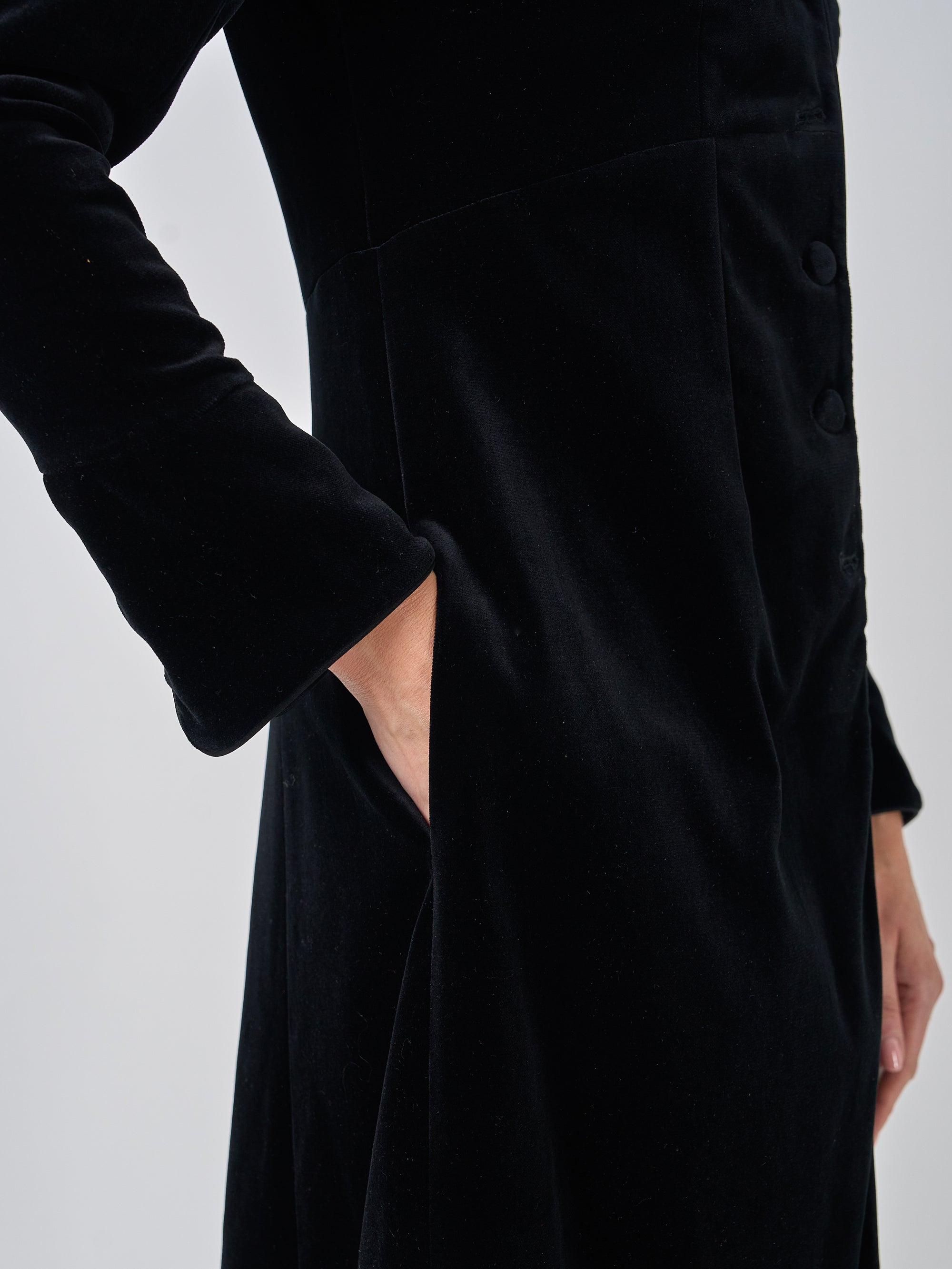
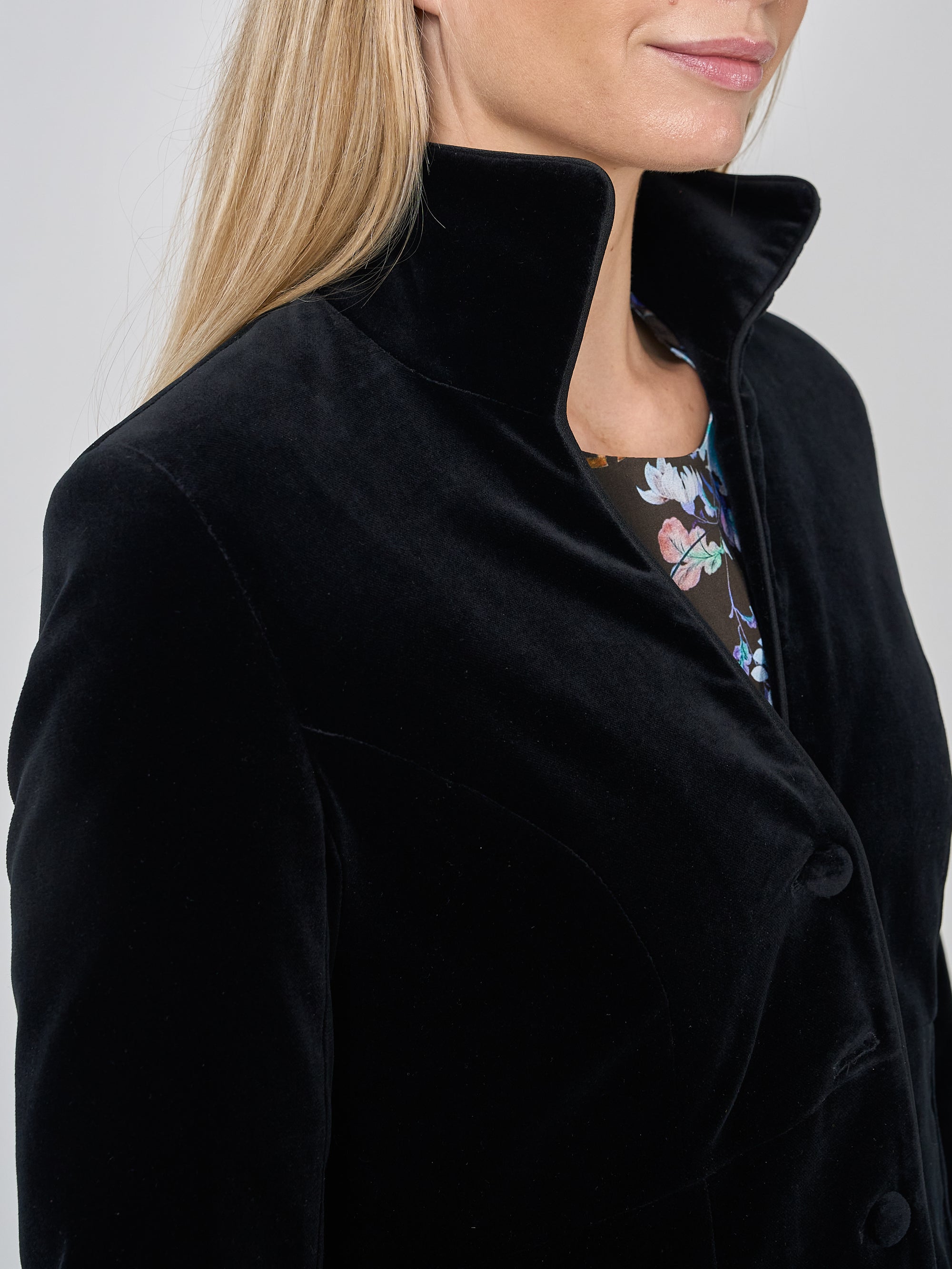
Much of what is sold as silk velvet is a blend, and Favourbrook is open about it. Our silk velvet is 82% rayon and 18% silk, because pure silk velvet is rare and fearsomely expensive. The blend gives fluid drape, luminous colour and a beautifully soft handle, ideal for evening coats such as the Whitehall and Westminster, and a perfect canvas for French embroidery. Cotton velvet trades a little sheen for body and durability: denser, more matte and firmer in the hand, which is why it suits our menswear tailoring and coats such as the Claret Long Swing Coat.

Look closer at pattern

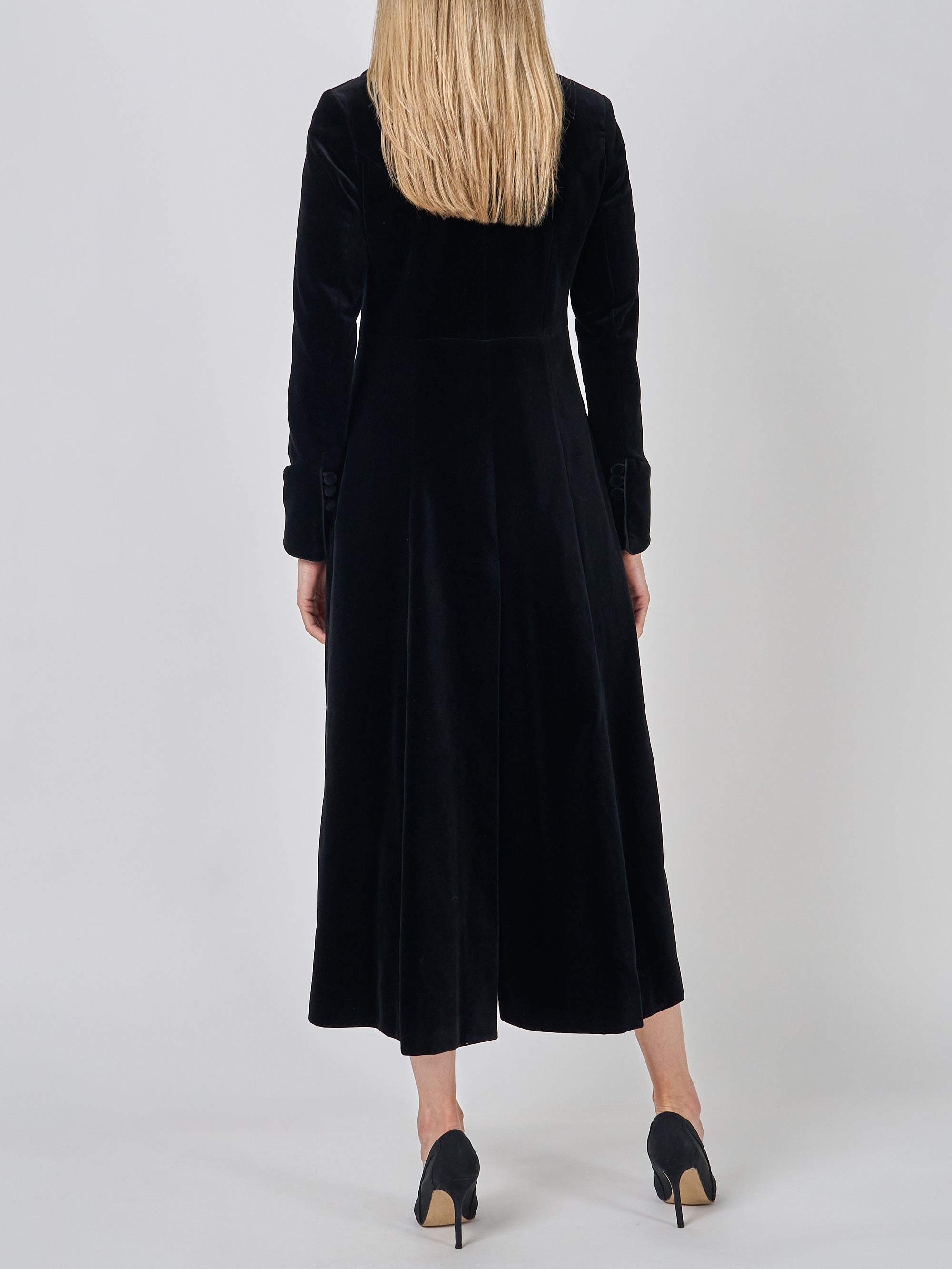
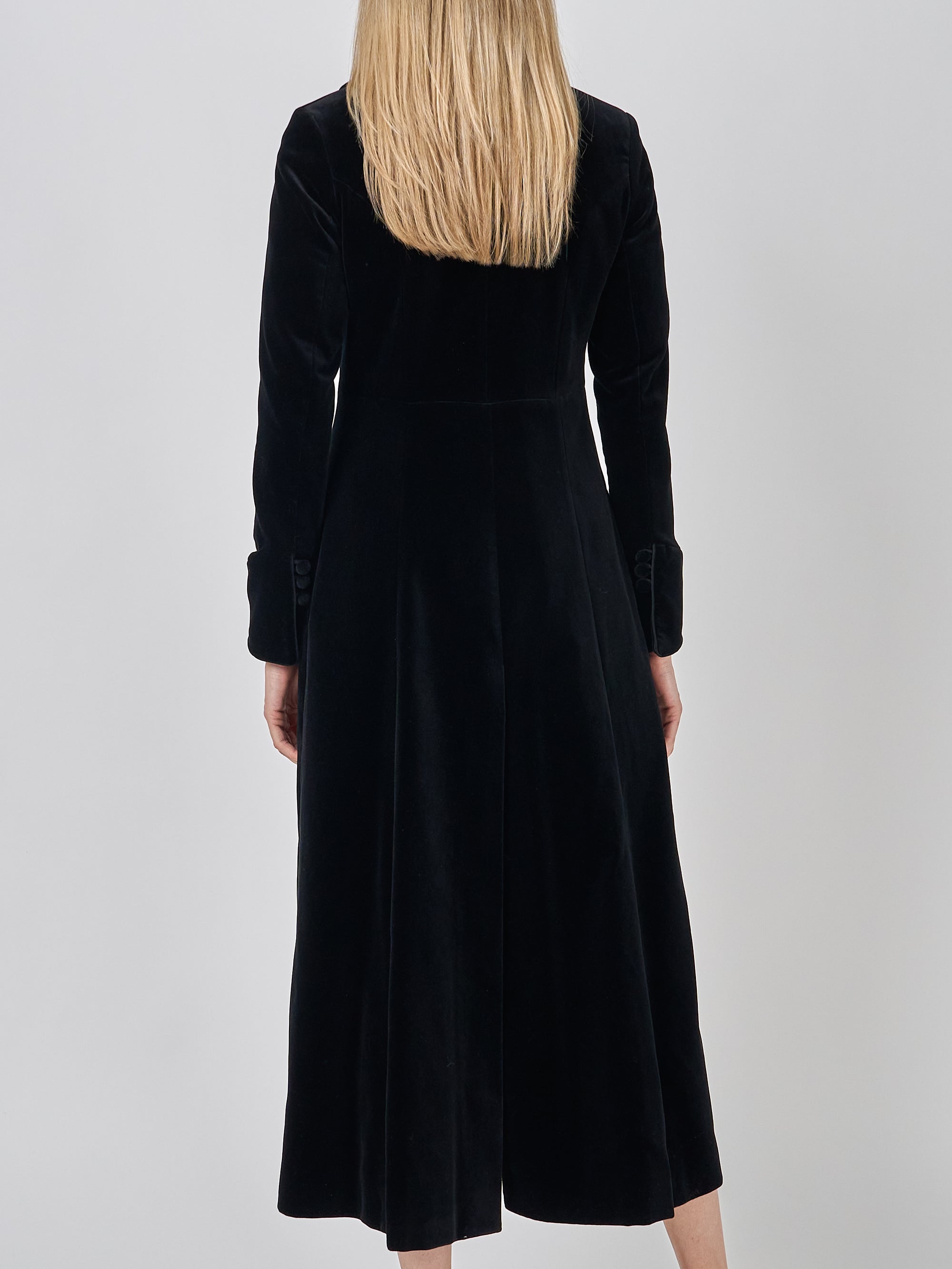
In Favourbrook's Nene cloth, used for the Midnight Black and Green dinner jackets, the motif is worked into the pile itself rather than printed on top, so it reads in texture rather than colour. Much of the womenswear velvet, meanwhile, is made up in London and finished with covered buttons, contrast piping and working cuffs.

Care for it properly

Hang velvet on a shaped hanger, steam rather than iron, and brush gently with the nap. Treated well, good velvet ages like a fine leather armchair. Bad velvet simply ages.

← Older Post Newer Post →

Leave a comment

Journal

RSS
The Register: Berkeley Square Fair, Tosca and the Art of Looking Expensive

The Register: Berkeley Square Fair, Tosca and the Art of Looking Expensive

October in London is the month the city stops pretending it is interested in anything other than art. In this issue of The Register, we...

Read more
This Winter, Live In Velvet

This Winter, Live In Velvet

There are fabrics you wear and fabrics you feel, and velvet has always belonged firmly in the second category. Discover this season's collection of velvet...

Read more
The Register: Berkeley Square Fair, Tosca and the Art of Looking Expensive

The Register: Berkeley Square Fair, Tosca and the Art of Looking Expensive

October in London is the month the city stops pretending it is interested in anything other than art. In this issue of The Register, we...

Read more
Velvet, Decoded: How To Tell Good From Bad

Velvet, Decoded: How To Tell Good From Bad

Velvet - whether of the cotton or silk variety - is a delicious fabric but not all velvet cloths are made equally. Here’s how to...

Read more
This Winter, Live In Velvet

This Winter, Live In Velvet

There are fabrics you wear and fabrics you feel, and velvet has always belonged firmly in the second category. Discover this season's collection of velvet...

Read more
Not For Wallflowers: The Patterned Dinner Jacket

Not For Wallflowers: The Patterned Dinner Jacket

Black tie is one of the few dress codes that tells you almost exactly what to wear, which is precisely why the patterned dinner jacket...

Read more
The Black Tie Rules Worth Breaking

The Black Tie Rules Worth Breaking

Black tie might seem a prescriptive dress code, but when you know which rules to bend, it can be a whole lot of fun...

Read more
A Black Tie Guide For Ladies

A Black Tie Guide For Ladies

Black tie for ladies used to be the exclusive domain of the ball gown, but today the dress code welcomes a variety of super chic...

Read more
Favourbrook: The Founding Story

Favourbrook: The Founding Story

From a Portobello stall and leftover ecclesiastical silks, Oliver Spencer built Favourbrook: waistcoats, velvet jackets and occasionwear with romance, fun and a very London sense...

Read more
The Season Of The Waistcoat

The Season Of The Waistcoat

The feminine waistcoat is not a borrowed men’s garment. Cut for a woman’s line, in silk douppion, cotton velvet and brocade, it gives evening dressing...

Read more
Why The Waistcoat Still Does All The Talking

Why The Waistcoat Still Does All The Talking

Favourbrook began with leftover silk and a waistcoat. Thirty-odd years later the collection is still the house’s calling card: single-breasted and double-breasted, gabardine and velvet,...

Read more
The Key Fabrics For AW26

The Key Fabrics For AW26

From slubby silk douppion to gorgeously lightweight georgette via rich velvet brocades and delicate French embroidery, discover the essential fabrics that give our AW26 collection...

Read more
The Interview: Lady Fuller

The Interview: Lady Fuller

Neston Park has been home to the Fuller family for generations, and provided the setting for Favourbrook’s AW26 campaign. We sat down with Venetia, Lady...

Read more
Beyond The Dinner Jacket: Accessorising Black Tie

Beyond The Dinner Jacket: Accessorising Black Tie

Turn a great dinner suit into an outstanding ensemble with a carefully selected assortment of formal accessories.

Read more